
Composite fastpitch softball bats continue to dominate competitive play for one simple reason: performance ceiling. When properly broken in, a high-quality composite bat delivers elite barrel compression, reduced vibration, and a larger sweet spot than most alloy alternatives.
In this guide, we break down the best composite fastpitch softball bats for 2026, explain how to choose the right one for your swing type, and answer the most common questions players and parents have before investing in a premium bat.
If you’re serious about maximizing exit velocity, feel, and confidence at the plate, this is the guide for you.
- Breaking in your composite with cage balls. Dimpled practice balls are harder and denser than regulation softballs. Using them during break-in accelerates barrel wear unevenly and can permanently damage the fiber layers before the bat ever reaches peak performance. Always break in with a real 11" or 12" softball — no exceptions.
- Swinging your composite in cold weather because "it'll be fine." Below 55°F, composite barrel walls lose flexibility and crack risk increases sharply. Most manufacturer warranties explicitly exclude cold-weather damage. One cracked barrel at a chilly April tournament can turn a $400 investment into a $400 loss. Keep the composite for warm days and use an alloy or hybrid in cold conditions.
- Judging a two-piece composite after fewer than 100 swings. The fiber layers in a composite barrel need compression and repeated flex to reach their designed performance window. Hitters who return or dismiss a bat after 30 cage swings are making a decision about a bat that hasn't started performing yet. Reserve your verdict until after a complete, properly rotated break-in.
- Assuming every composite on this list is approved for your league. USA Softball, USSSA, NFHS, NSA, and ISA all maintain separate approved bat lists, and they are updated throughout the season. A bat that was legal last year may have been removed. Check your association's official approved list — not the retailer's certification claim — before every season starts.
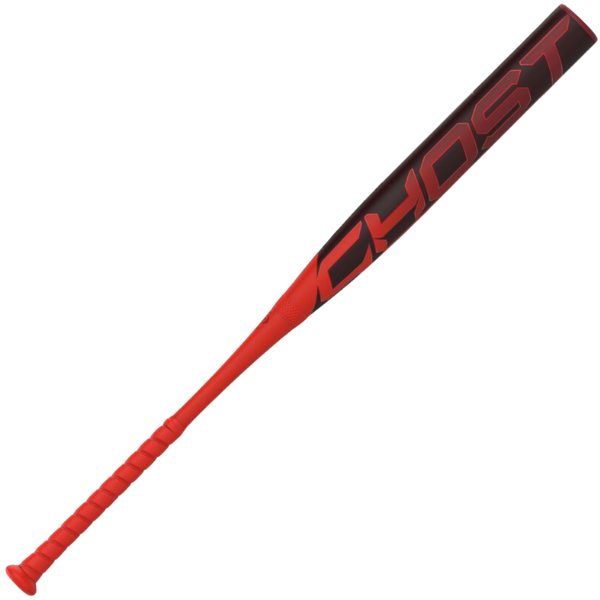
- Picking a one-piece composite when your swing needs a two-piece. One-piece composites like the Ghost Unlimited deliver maximum energy transfer and a stiff, direct feel — ideal for power hitters with strong mechanics. But for contact hitters, slappers, or players who experience hand sting on mishits, a one-piece will punish you. Two-piece designs exist for a reason. Match the construction to how you actually hit, not to what sounds more premium.
⚡ Quick Takeaways
- Composite bats outperform alloy once fully broken in — expect 150–200 hits before peak performance
- The best two-piece composite bats reduce vibration on mishits and improve energy transfer on contact
- Drop weight matters: power hitters do better with -8 or -9; contact hitters and younger players typically prefer -10 or -11
- All bats on this list are approved for USA Softball, USSSA, and most major associations — always confirm with your league before purchasing
- Price range for premium composite bats runs $350–$500. Solid budget options start around $150–$200
Composite vs. Alloy — At a Glance
| Factor | Composite | Alloy |
|---|---|---|
| Break-in required | Yes — 150–200 hits | No — field-ready immediately |
| Peak performance | After break-in period | Immediate |
| Cold weather use | Avoid below 55°F | More durable in cold |
| Sweet spot size | Larger, especially end-loaded | Smaller, more precise |
| Vibration on mishits | Lower (two-piece designs) | Higher |
| Price range | $150 – $500 | $50 – $300 |
| Durability | Moderate — can crack | High |
| Best for | High school, travel ball, college | Beginners, cold climates, youth |
| 2026 Best Composite Fastpitch Bats — Comparison | ||||||
|---|---|---|---|---|---|---|
| Bat | Construction | Drop Options | Swing Feel | Certification | Price | Best For |
|
Louisville Slugger Kryo #1 — Editors' Choice |
Two-piece composite | -8, -9, -10, -11 | Balanced, smooth | USA, USSSA, NFHS | ~$380–$450 $$$$ |
Best overall — all hitter types |
|
Easton Ghost Advanced #2 |
Two-piece composite | -8, -9, -10, -11 | Power-leaning | USA, USSSA, NFHS | ~$400–$500 $$$$ |
Power hitters, max barrel performance |
|
Louisville Slugger LXT #3 |
Two-piece composite | -8, -9, -10, -11 | Balanced, reliable | USA, USSSA, NFHS | ~$350–$420 $$$ |
Widest skill range, transition hitters |
|
DeMarini CF #4 |
Two-piece composite | -8, -9, -10, -11 | Ultra-light, fast | USA, USSSA, NFHS | ~$300–$400 $$$ |
Slap hitters, contact specialists |
|
Easton Ghost Unlimited #5 |
One-piece composite | -9, -10, -11 | Stiff, direct | USA, USSSA, NFHS | ~$400–$499 $$$$ |
Balanced hitters, gap power |
|
DeMarini Prism+ #6 |
Two-piece composite | -10, -11 | Smooth, forgiving | USA, USSSA, NFHS | ~$350–$400 $$$ |
Contact hitters, barrel control focus |
What Makes a Composite Fastpitch Bat Worth the Price?
Composite bats are built from layered carbon fiber materials — not the same as aluminum. The key advantage isn’t just weight; it’s how the barrel responds to contact.
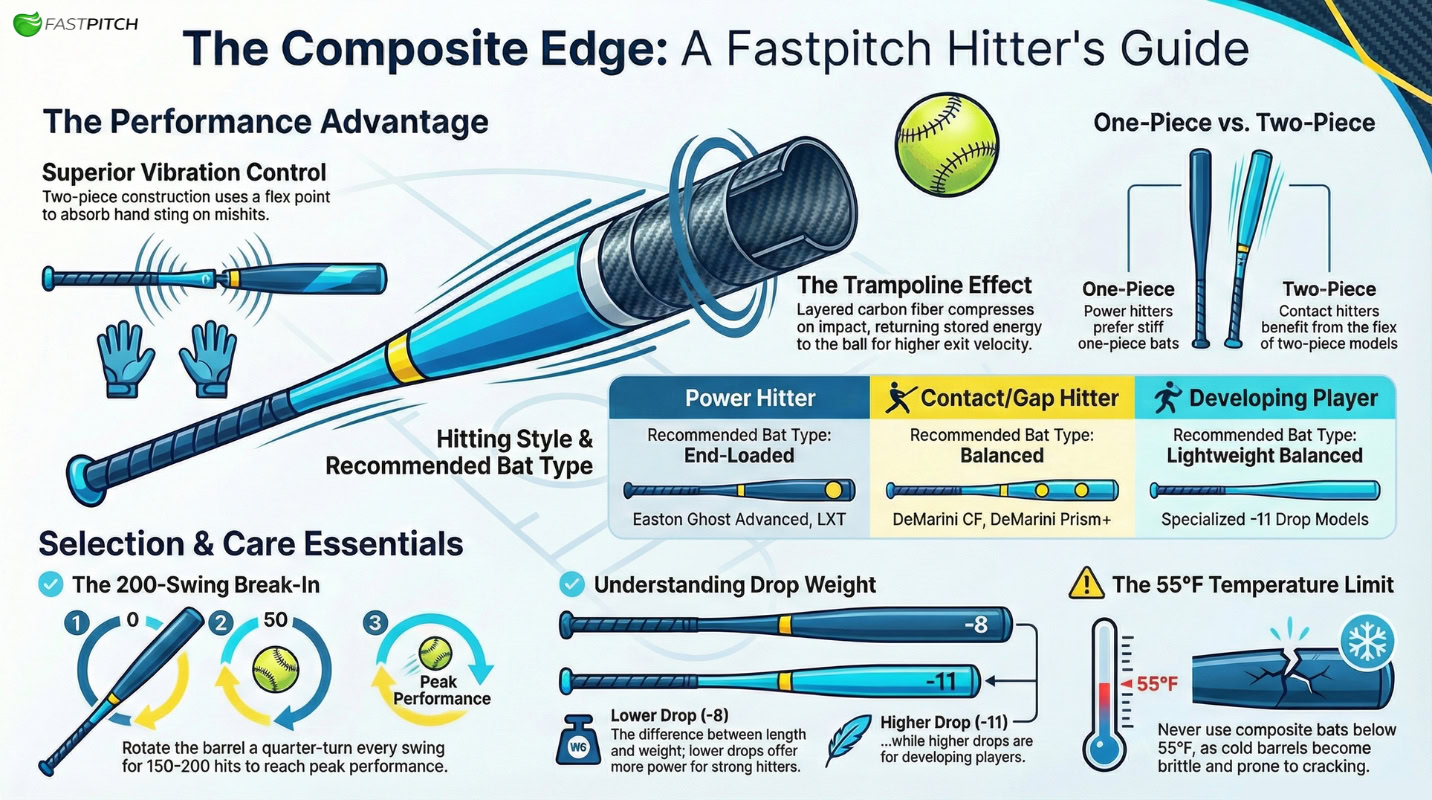
A well-engineered composite barrel offers a “trampoline effect” that alloy can’t fully replicate. When the ball compresses the barrel on impact, that stored energy returns to the ball. The result is better exit velocity on properly-timed contact.
But there’s a catch: composite bats don’t deliver full performance out of the wrapper. Most two-piece composite bats require a break-in period of 150–200 controlled swings — rotating the barrel a quarter turn between swings to ensure even wear. Alloy bats are field-ready immediately.
Once broken in, a quality composite bat typically outperforms alloy at equivalent price points. That payoff is why serious high school and travel ball players invest in them. This construction allows manufacturers to:
- Engineer multi-layer barrel systems
- Increase the trampoline effect over time.
- Reduce vibration on mishits.
- Fine-tune swing weight distribution.
Best Composite Fastpitch Bats Reviewed
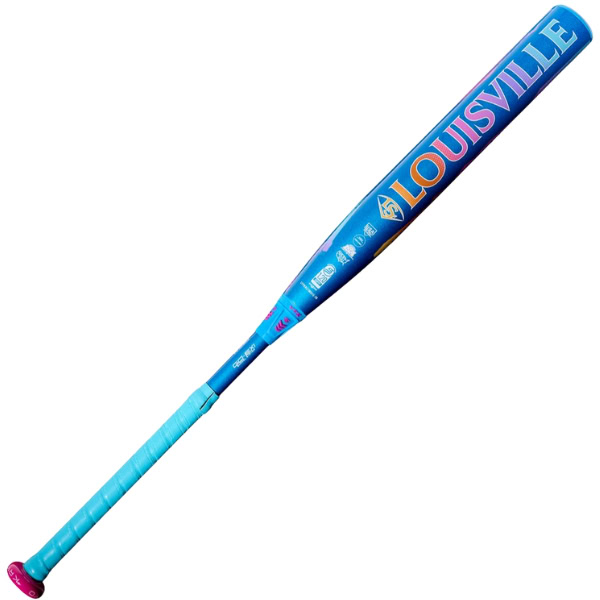
1. Louisville Slugger Kryo – Best Overall Performance
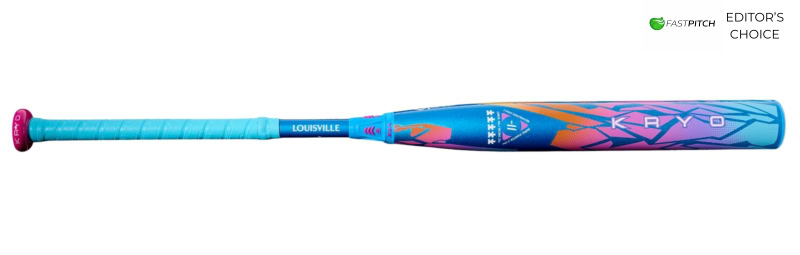
Best for: All hitter types, balanced-swing preference | Drop options: -8, -9, -10, -11 | Price: ~$380–$450
Louisville Slugger’s flagship composite for 2026, the Kryo, is best understood as the Meta’s successor — built around the same premium positioning, but with a new barrel system designed to be more accessible across hitter types.
The headline technology is the GO-EX1 Barrel System, which pairs a composite gapped wall design with an internal disc system and the XPND End Cap. What that means in practice: the sweet spot extends further toward the end of the barrel than previous Slugger models, which pays off on pitches you don’t catch perfectly at the center. The VTX Connection System handles vibration on mishits by allowing independent movement between the barrel and handle — the result is a cleaner feel through the zone, even on off-center contact.
The swing weight is balanced and smooth, which separates the Kryo from the Meta it replaces. Where the Meta rewarded strong, experienced hitters who could consistently find the barrel, the Kryo is designed to perform across a wider range of player types — from slappers and contact hitters in the -11 to power hitters who need durability and performance in the -8.
Highlights:
- Smooth swing path.
- Consistent barrel flex.
- Strong performance across the entire sweet spot.
Best For:
- Advanced contact hitters who also generate gap power.
2. Easton Ghost Advanced – Elite Barrel Feel
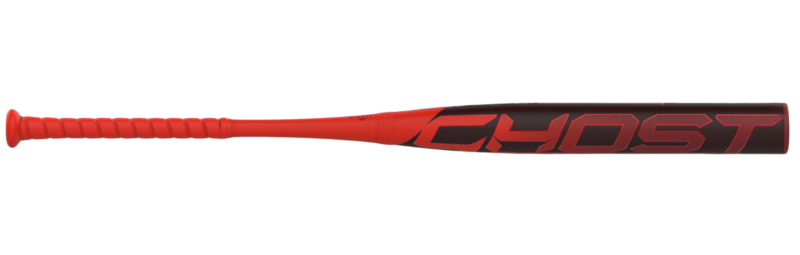
Best for: Power hitters, stronger players | Drop options: -8, -9, -10, -11 | Price: ~$400–$500
The Easton Ghost Advanced has built a reputation over multiple seasons for a reason: the barrel performs at a high level once broken in, and the double-barrel construction extends the sweet spot in a way that rewards aggressive swings.
Easton’s Double Barrel EXT design creates an inner and outer barrel system — the inner barrel loads energy, the outer barrel releases it. The result is a distinctive pop sound and a barrel that feels responsive even on pitches you don’t catch at the center. The VRS1 connection joint provides a slightly stiffer feel compared to the Prism+, which power hitters tend to prefer.
Highlights:
- Extremely responsive double-barrel construction.
- Massive sweet spot.
- Balanced swing weight.
- Strong vibration dampening.
Best For:
- Travel ball and high-level high school hitters who want maximum barrel performance without sacrificing balance.
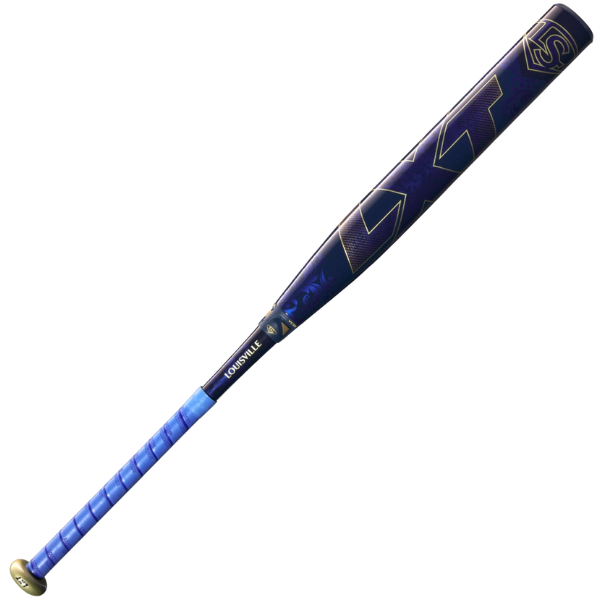
3. Louisville Slugger LXT – Controlled Power
Best for: All hitter types, wide skill range | Drop options: -8, -9, -10, -11 | Price: ~$350–$420
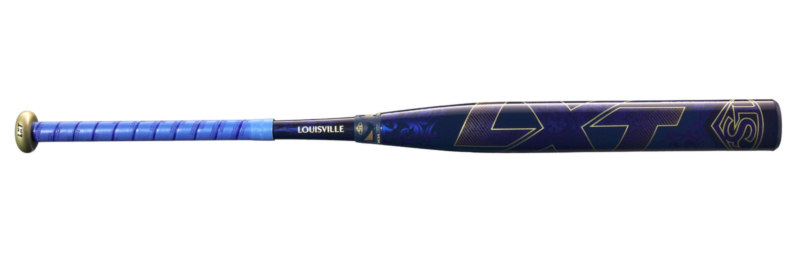
The LXT has been one of the most recommended composite fastpitch bats for years — not because it’s the flashiest option, but because it’s reliably excellent across different hitter types. That’s a harder achievement than it sounds.
The patented single-disc speed composite barrel delivers consistent pop with a balanced swing. The feel on solid contact is satisfying — there’s a clean sound and a follow-through that doesn’t feel like the energy got absorbed somewhere in the handle. Experienced players moving up from -11 to -9 or -8 often find the LXT a reliable transition bat because the swing characteristics stay predictable even as the drop weight changes.
Highlights:
- Balanced design.
- Reliable durability.
- Excellent vibration reduction.
Best For:
- High school athletes who want dependable performance in game situations.
4. DeMarini CF – Lightweight & Fast
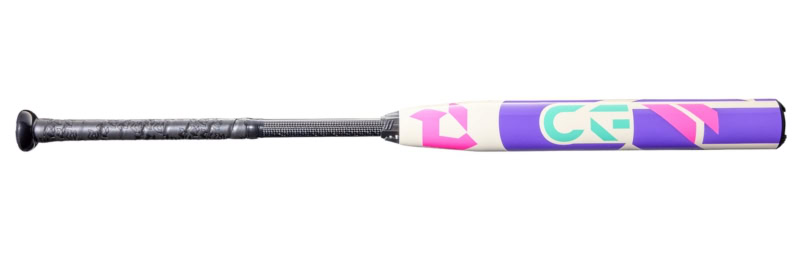
Best for: Lighter swingers, slap hitters, developing players | Drop options: -8, -9, -10, -11 | Price: ~$300–$400
The DeMarini CF is purpose-built for players who generate power through bat speed rather than raw strength. The Paraflex Plus Composite Barrel is one of the more responsive barrel constructions available, delivering a large sweet spot without excessive swing weight.
The Tracer End Cap on the CF is specifically engineered to reduce end cap weight, increasing swing speed. For players who depend on quickness through the zone — slappers, gap hitters, contact specialists — the CF is designed around their approach to hitting.
Highlights:
- Easy to swing.
- Large sweet spot.
- Smooth feel on contact.
Best For:
- Youth and developing high school hitters who need speed through the zone.
5. Easton Ghost Unlimited – Two-Piece Elite Composite Bat
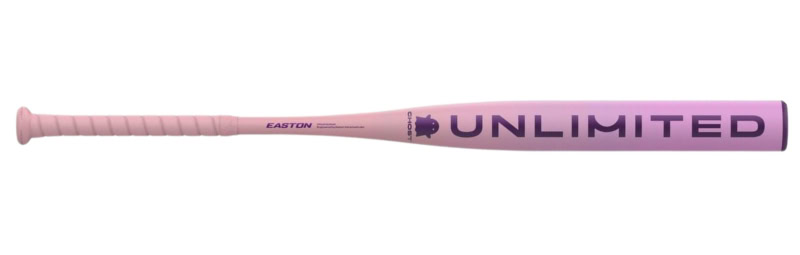
Not every bat that carries a recognizable name lives up to the expectation. The Easton Ghost Unlimited is one of the few that actually does — but it takes a little patience to get there.The headline feature is the Double Barrel 3 construction, a two-piece composite design where an inner and outer barrel work in tandem to create a larger, more responsive sweet spot.
Unlike a single-wall barrel, this dual-layer system compresses on contact and releases energy back into the ball more efficiently. The practical result is a bat that rewards solid contact with genuine carry — not just for pull hitters, but for players who work the gaps.Swing weight sits on the balanced side, which works in favor of hitters who generate their power through hand speed rather than body mass. Slappers and contact-first players will feel comfortable through the zone. If you’re a hitter who relies on load-and-drive mechanics, you may find the bat feels slightly underwhelming until the barrel loosens up.That break-in period is the one honest tradeoff worth flagging. Rotating the barrel consistently on a tee — roughly 150 to 200 hits — is the recommended approach before trusting it in a game.
Players who skip this step often underestimate what the bat can do.Once broken in, the Ghost Unlimited delivers consistent, reliable performance across pitch locations. It holds up well over a full season, and the feedback on mishits is forgiving enough that off-center contact doesn’t punish your hands.At its price point, it competes with the best fastpitch bats available. For high school and travel ball athletes who want a technically engineered, balanced two-piece composite, the Ghost Unlimited is a legitimate option worth serious consideration.
6. DeMarini Prism+ – Smooth and Forgiving
Best for: Contact hitters and versatile players | Drop options: -10, -11 | Price: ~$350–$400
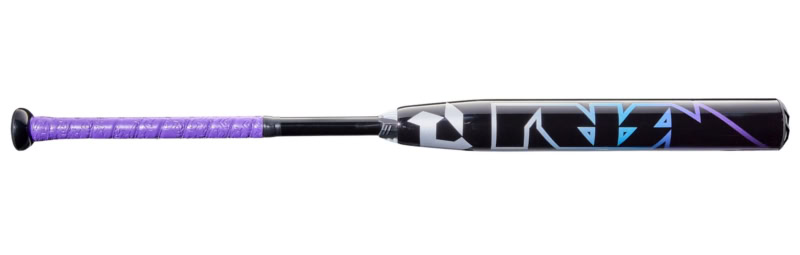
The DeMarini Prism+ earns its spot at the top of this list because of one underrated feature: consistency. The Gapped Wall Continuous Fiber Composite Barrel delivers a reliable, forgiving response across a wide section of the barrel — not just the sweet spot.
The Type-V Connection piece is worth understanding. It integrates the barrel and handle in a way that reduces vibration on off-center contact without sacrificing the energy transfer you want on solid hits. For contact hitters who make frequent contact but don’t always catch the ball perfectly, this connection system matters in real at-bats.
Highlights:
- Excellent vibration control.
- Balanced feel.
- Reliable sweet spot.
Best For:
- Contact hitters who prioritize barrel control over pure power.
How to Choose the Right Composite Fastpitch Bat
Choosing the right bat is more important than simply picking the most expensive option.
1. Determine Your Swing Type
- Power hitter → Easton Ghost Advanced (end-loaded options) or Louisville Slugger LXT
- Contact/gap hitter → DeMarini CF or DeMarini Prism+
- Versatile/unsure → Louisville Slugger LXT
2. Select the Correct Drop Weight
- Drop -10 → Standard for high school and travel.
- Drop -11 → Lighter feel, quicker swing.
- Drop -9 → Slightly heavier for stronger hitters.
3. Consider Break-In Time
Composite bats require approximately 100–200 hits to reach peak performance. If you need immediate performance without break-in, alloy may be worth considering.
4. Evaluate League Certification
- USA Softball (ASA)
- USSSA
- High School (NFHS)
Frequently Asked Questions (FAQ)
Do composite bats have more pop than alloy bats?
Yes. Once fully broken in, composite bats typically produce greater barrel compression and higher exit velocities compared to alloy bats.
How do you properly break in a composite fastpitch bat?
Rotate the bat slightly after each swing during the first 150–200 hits. Use regulation softballs. Avoid hitting in temperatures below 60°F.
Can you use composite bats in cold weather?
You shouldn’t. Below 55°F, composite barrel walls become significantly less flexible and far more susceptible to cracking. Most manufacturers include cold-weather minimum temperature recommendations in their warranty terms — and damage from cold use typically voids coverage. If you’re playing in cold conditions, an alloy bat is the safer choice for practice. Save the composite for warmer game days.
How long does it take to break in a composite bat?
Most composite fastpitch bats reach peak performance after 150–200 hits. The recommended method is to use a real softball (not a dimpled batting cage ball — these accelerate wear and can damage the barrel), rotating the bat a quarter turn between swings to distribute break-in evenly across the barrel wall. Expect to dedicate at least 3–4 serious batting practice sessions before your bat is fully game-ready.
Do composite bats lose pop over time?
Eventually, yes. After extended heavy use, barrel compression may decline. However, high-quality models maintain performance for multiple seasons.
Is a more expensive composite bat worth it?
For competitive players, yes. Premium composite bats offer improved barrel technology, vibration control, and durability that can make a measurable difference.
What’s the difference between one-piece and two-piece composite bats?
A one-piece composite bat (like the Easton Ghost Unlimited) delivers a stiffer feel — more energy goes directly into the ball on contact, which power hitters tend to prefer. A two-piece composite bat (like the DeMarini Prism+ or LXT) has a flex point where the barrel meets the handle, which absorbs vibration on mishits. That’s why two-piece bats feel more forgiving and are often recommended for contact hitters or players who experience hand sting.
Final Word
Every bat on this list earns its place — but “best” depends on who’s swinging it.
If you’re a power hitter in high school or travel ball, ready to invest at the top of the market, the Easton Ghost Advanced or Louisville Slugger Kryo will deliver. If you’re a contact hitter who values consistency over ceiling, the DeMarini Prism+ or CF is where your money is better spent. And if you want a single bat that covers the widest range of hitters and situations, the Louisville Slugger LXT remains the most reliable choice in this tier.
At AllAboutFastpitch, we review equipment the way players think about it — not as a list of specs, but as a real $400 decision that affects your performance for the next season.
PRODUCT RECOMMENDATION
Louisville Slugger Kryo
The 2026 Louisville Slugger Kryo is currently the top fastpitch bat available. With a GO-EX1 barrel that gets hotter the more you use it, fast exit speeds, and a balanced swing weight that really boosts bat speed — at $450, it’s a solid investment for dedicated players.