Updated: March 2026
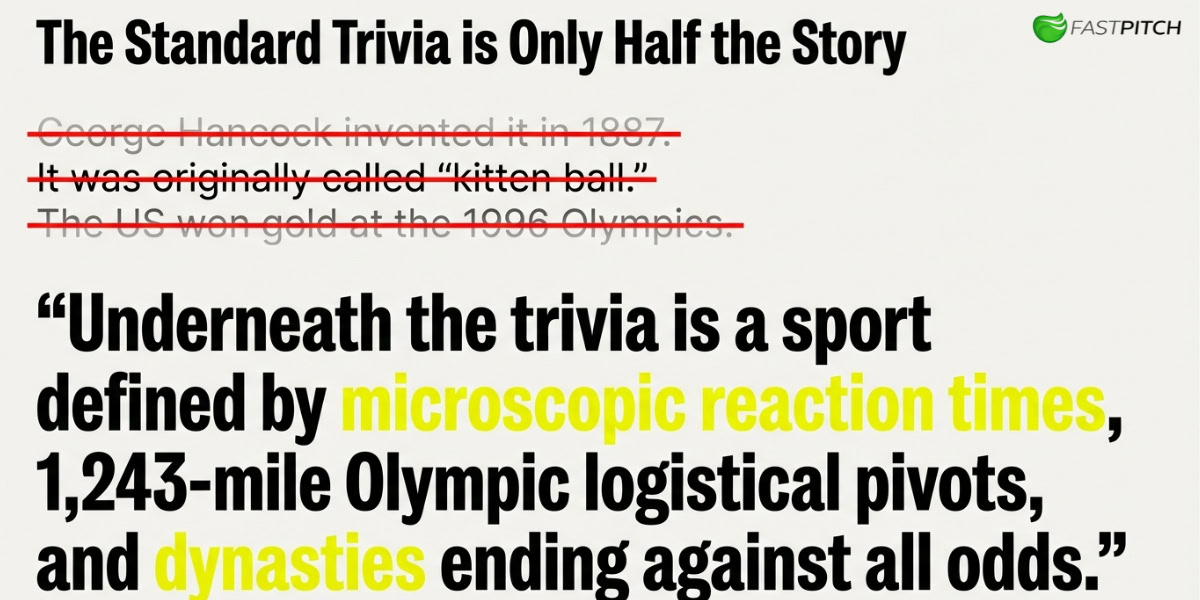
Most softball facts articles tell you the same six things. George Hancock invented it in 1887. It was once called “kitten ball.” The US won gold at the 1996 Olympics. Every ticket was sold out.
That version isn’t wrong. It’s just incomplete.
Underneath it is a sport with a Guinness World Record broken on a college diamond in May 2025, an Olympic return playing out at a purpose-built stadium 1,243 miles from the city whose name is on the Games, and four straight national championships — ended by a program that had never won one.
Here are 15 facts about softball that go beyond the surface.
The Origin Story Has Details Most People Get Wrong
1. The First “Ball” Was a Boxing Glove — and the Game Was Running Inside an Hour
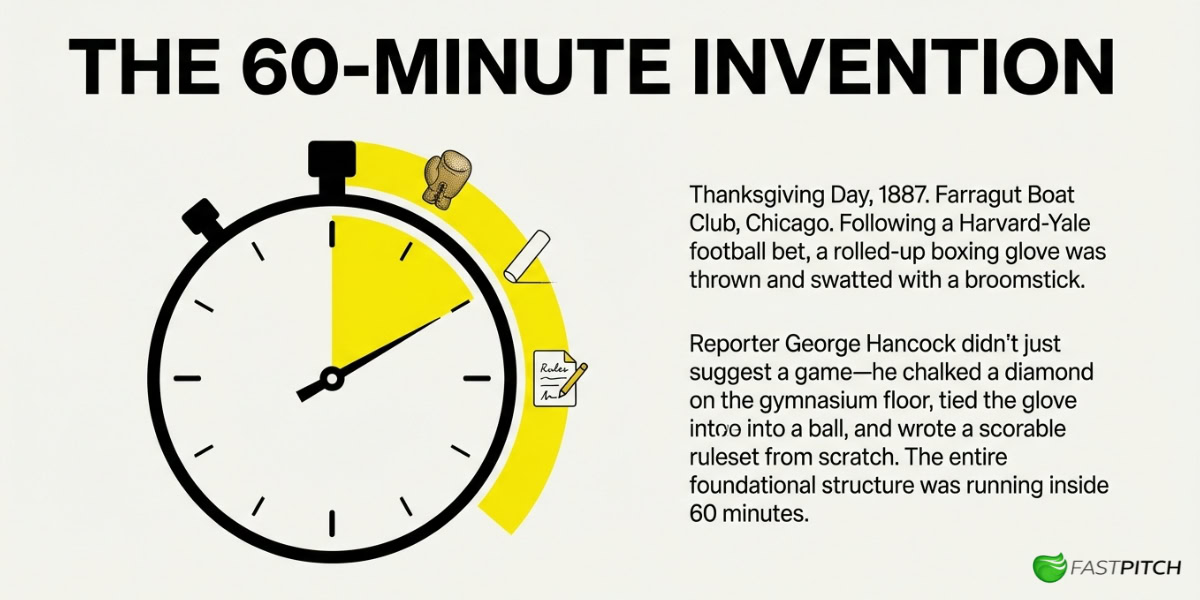
On Thanksgiving Day, 1887, a group gathered at the Farragut Boat Club in Chicago to hear the result of the Harvard-Yale football game. A Yale fan, celebrating the win, grabbed a rolled-up boxing glove and threw it toward the Harvard supporters. One of them picked up a stick and batted it back.
George Hancock — a reporter standing nearby — called, “Play ball.” He spent the next hour chalking a diamond on the gymnasium floor, tying the boxing glove into a rough ball, and writing a set of rules from scratch. The first game was played indoors that afternoon, on Thanksgiving, with improvised equipment and freshly invented rules.
What most versions leave out is the speed of it. Hancock didn’t just suggest the game — he had a structured, scoreable version running within 60 minutes of the idea forming. Within a year, it had moved outside and gained a formal ruleset.
2. The Sport Went By Six Different Names Before Anyone Agreed on “Softball.”
Before the name stuck, the game was called: indoor baseball, kitten ball, mush ball, playground ball, diamond ball, and pumpkin ball. “Kitten ball” came from a Minneapolis fire department team called The Kittens, who popularized the outdoor variant around 1895. In parts of Chicago, the 16-inch no-gloves version is still called mushball today.
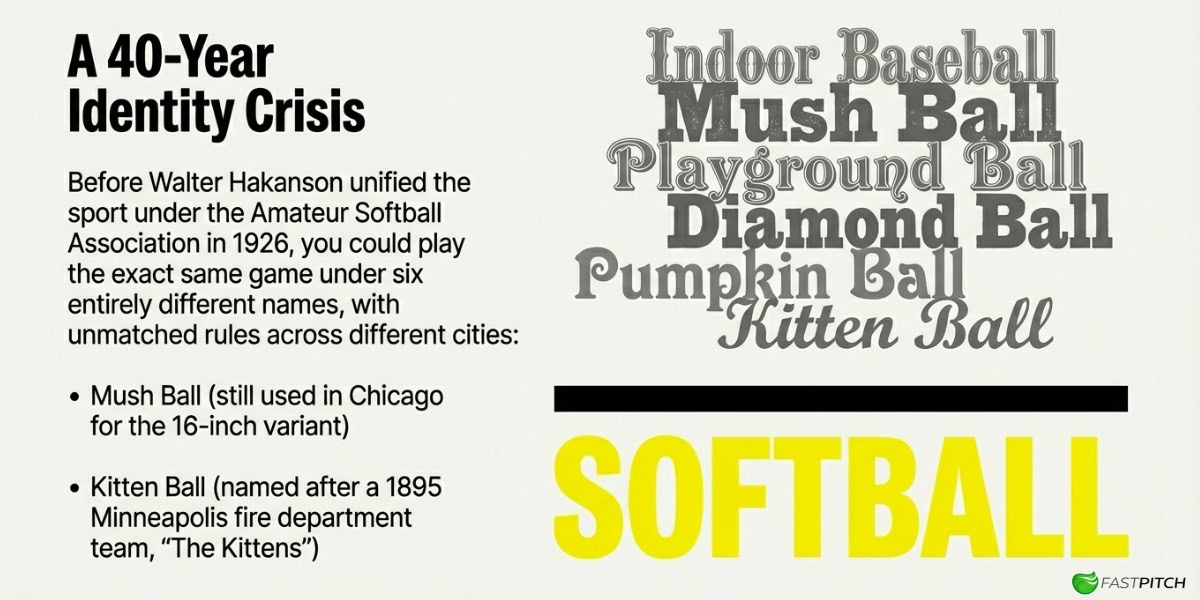
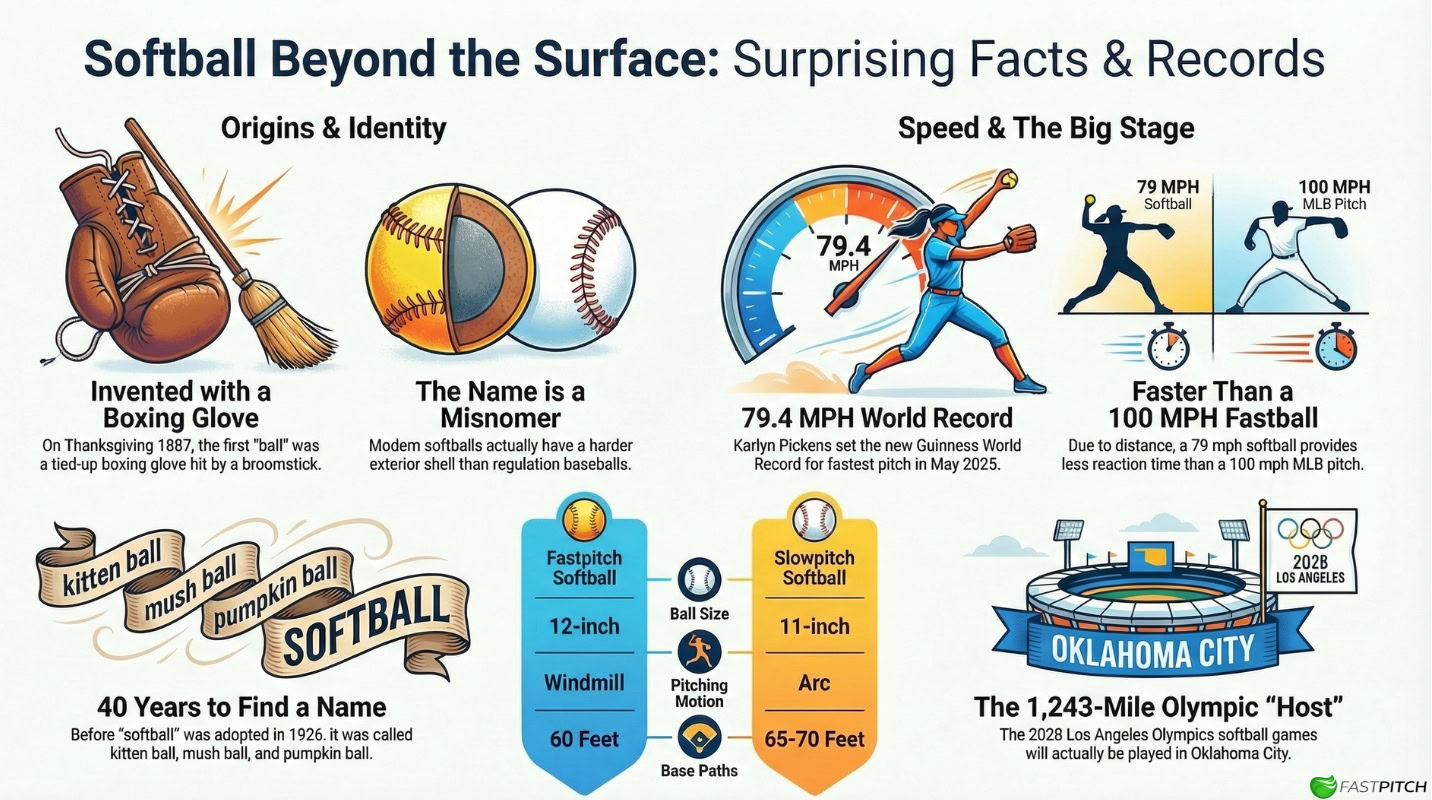
The name softball wasn’t formally adopted until 1926 — nearly 40 years after the game was invented — when Walter Hakanson proposed unifying all variants under one name at the Amateur Softball Association. Before that, you could be playing the same sport in two different cities under two completely different names, with rules that didn’t match.
The Records That Reframe What Fastpitch Is
3. The Guinness World Record for Fastest Pitch Was Broken Twice by the Same Pitcher — in the Same Season
On March 24, 2025, Tennessee pitcher Karlyn Pickens threw a 78.2 mph pitch against Arkansas — breaking the all-time record of 77 mph that had stood since 2012, set by former Lady Vol Monica Abbott in a National Pro Fastpitch game. Then, two months later, Pickens broke her own record.
On May 25, 2025, in the Knoxville Super Regional against Nebraska, Pickens delivered a 79.4 mph pitch to Jordy Bahl in the first inning. Guinness World Records officially certified it as the fastest softball pitch (female) ever thrown. Tennessee won that game 1–0. Pickens also led the SEC in ERA (0.99) and strikeouts (259) that season — the velocity record is one piece of a larger picture.
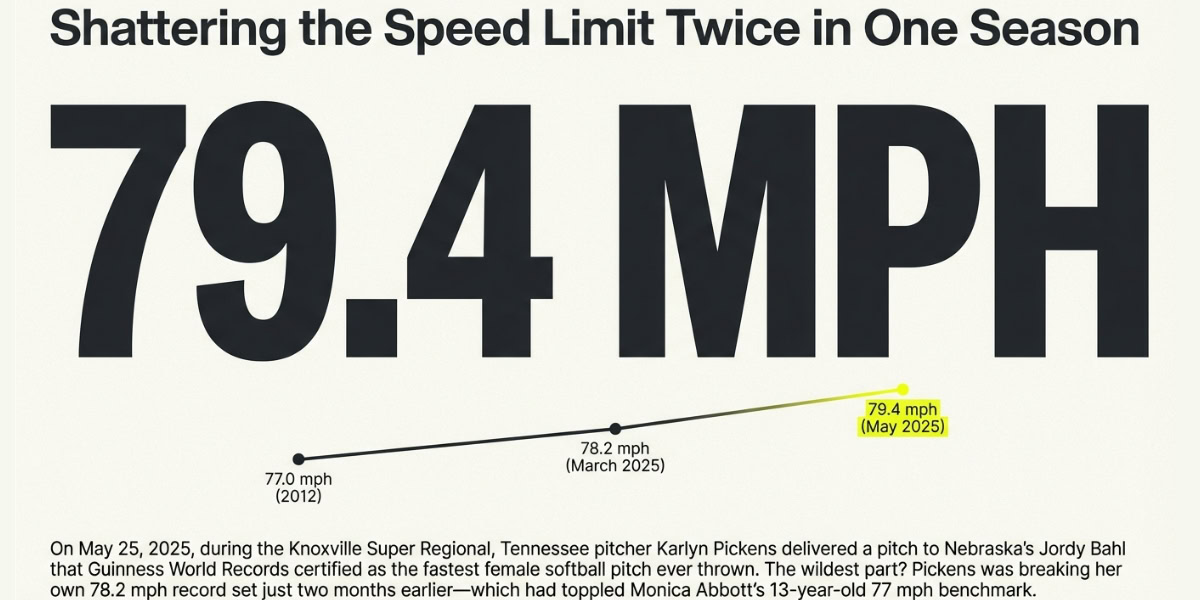
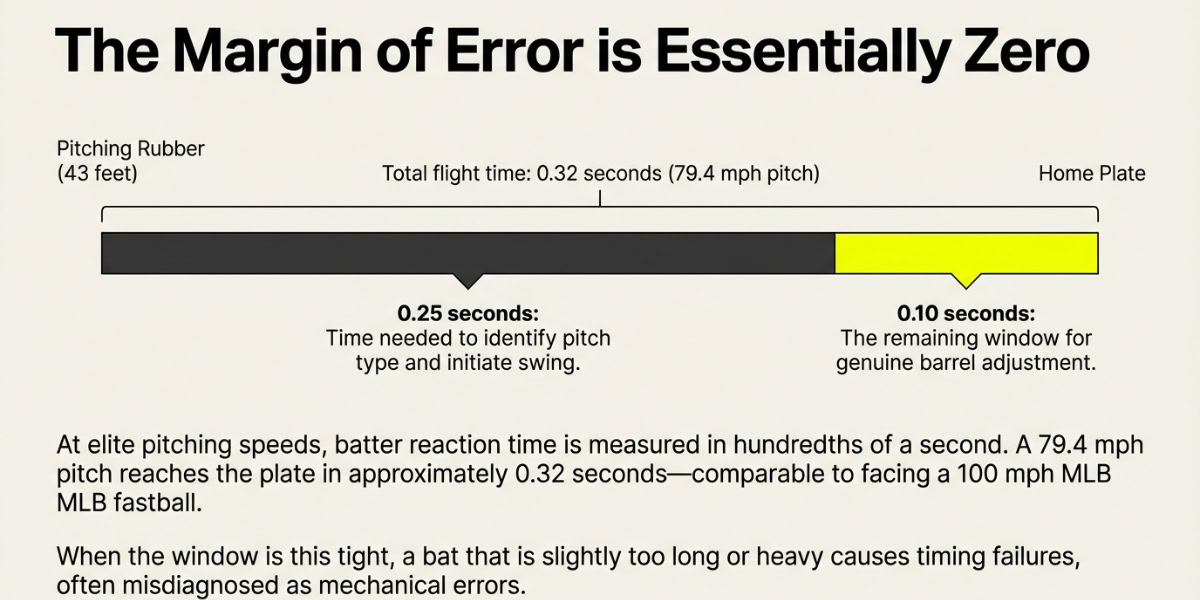
For context: the pitching rubber in fastpitch sits 43 feet from home plate. At 79.4 mph, the ball reaches the plate in roughly 0.32 seconds — comparable in reaction time to facing a 100 mph fastball in Major League Baseball. The margin for error, in timing and in equipment fit, is essentially zero.
4. A Regulation Softball Is Harder Than a Baseball — and Has Been for Most of the Sport’s History
The name has been misleading since 1926. A regulation 12-inch fastpitch softball has a harder exterior shell than a baseball and a tightly wound polyurethane core that doesn’t meaningfully compress on contact.
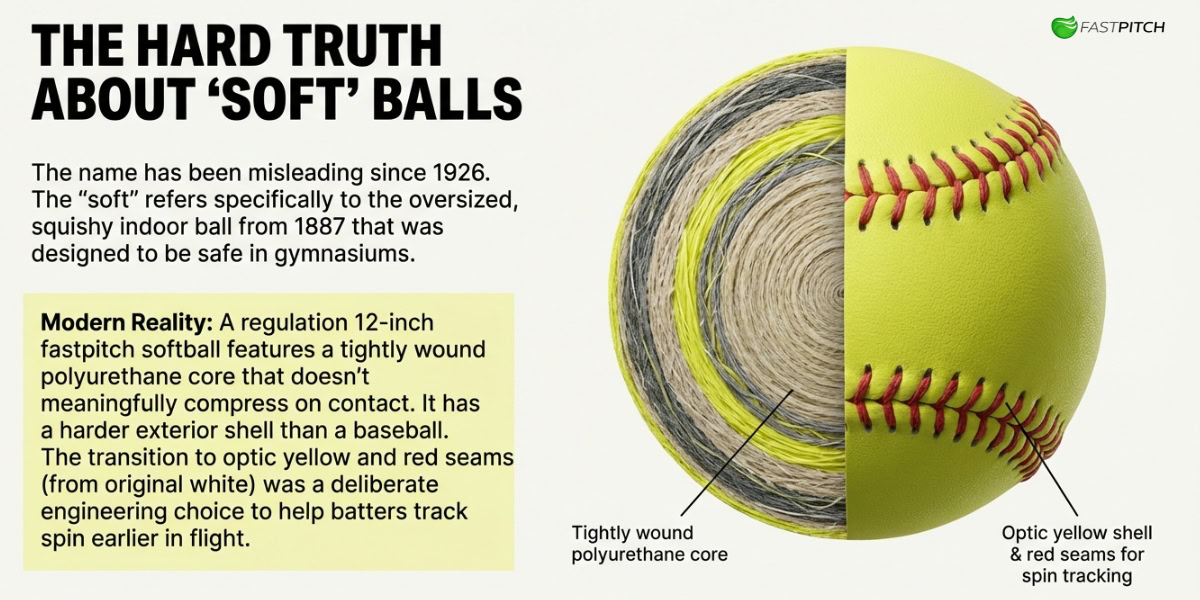
The “soft” in softball referred specifically to the original oversized indoor ball from 1887 — bigger, squishier, and designed to be safe inside a gymnasium. That ball was retired before the sport’s foundational rules were fully written. The modern ball is optic yellow with red seams, a deliberate change made to help batters track spin and pitch movement earlier in flight. The original was white with white seams.
5. At Elite Pitching Speeds, Batter Reaction Time Is Measured in Hundredths of a Second
A pitch at 70 mph from 43 feet reaches the plate in approximately 0.35 seconds. A batter needs roughly 0.25 seconds to identify the pitch type, make a decision, and initiate the swing. That leaves around 0.10 seconds of genuine adjustment time before contact.
At Karlyn Pickens’ record 79.4 mph, those windows compress further. Bat fit — specifically, drop weight and barrel length — directly affects how a player can use that window. A bat that’s too long delays the barrel’s arrival to inside pitches. A drop too heavy for a player’s current strength slows the swing through the zone. Both problems show up at the plate as timing failures, not equipment issues — which is exactly why they’re so often misdiagnosed.
Fastpitch Softball · Records & Key Numbers
| Record / Stat | Context | Figure |
|---|---|---|
| Fastest pitch — women's (Guinness) | Karlyn Pickens, Tennessee — May 25, 2025 | 79.4 mph |
| Previous record (same pitcher) | Karlyn Pickens vs Arkansas — Mar 24, 2025 | 78.2 mph |
| Record before 2025 | Monica Abbott, NPF game — 2012 | 77 mph |
| Pitching distance | High school, college, Olympic | 43 ft |
| Base path distance | All competitive levels | 60 ft |
| NCAA no-hit record | Monica Abbott, Tennessee | 23 no-hitters |
| 2025 NCAA champion | First title in program history | Texas |
| Oklahoma consecutive titles | 2021 – 2024 WCWS | 4 straight |
| Most NCAA titles, all-time | Inaugural champion — 1982 | UCLA — 12 |
| US participation (annual) | All softball variants, summer | 40M+ players |
| USA Olympic gold streak | Atlanta 1996 through Athens 2004 | 3 consecutive |
| Next Olympic appearance | Softball Park, Oklahoma City | LA 2028 |
Sources: Guinness World Records, NCAA.com, WBSC, LA28.org. Speed records and championship data as of March 2026.
If you’re evaluating bat specs for a competitive player, our guide to the best fastpitch softball bats covers the top-performing options across every drop weight, length, and hitting style.
The Olympic Arc — More Complicated Than Most People Know
6. Softball Was Dropped From the Olympics — the First Sport Cut in 69 Years
The IOC voted to remove softball from the Olympic program in July 2005, making it the first sport dropped from the Games since polo was cut in 1936. The 2008 Beijing Olympics were the last to feature softball as a medal event — and Japan broke the US three-gold-medal streak there, winning 3–1 in the final.
Every ticket to every softball game at the 1996 Atlanta Olympics had sold out. The sport had consistently grown its TV audience and global participation. The removal was controversial enough to trigger a decade-long reinstatement campaign, and it ultimately worked.
7. The US Won Three Straight Olympic Gold Medals — Then Lost the Gold Medal Game Twice in a Row
The USA Women’s National Team won gold at every Olympics where softball was contested from 1996 through 2004. Three consecutive titles across Atlanta, Sydney, and Athens. Japan ended that streak in Beijing 2008, then repeated as gold medalists at Tokyo 2020 (held in 2021 due to COVID), with the US taking silver both times.
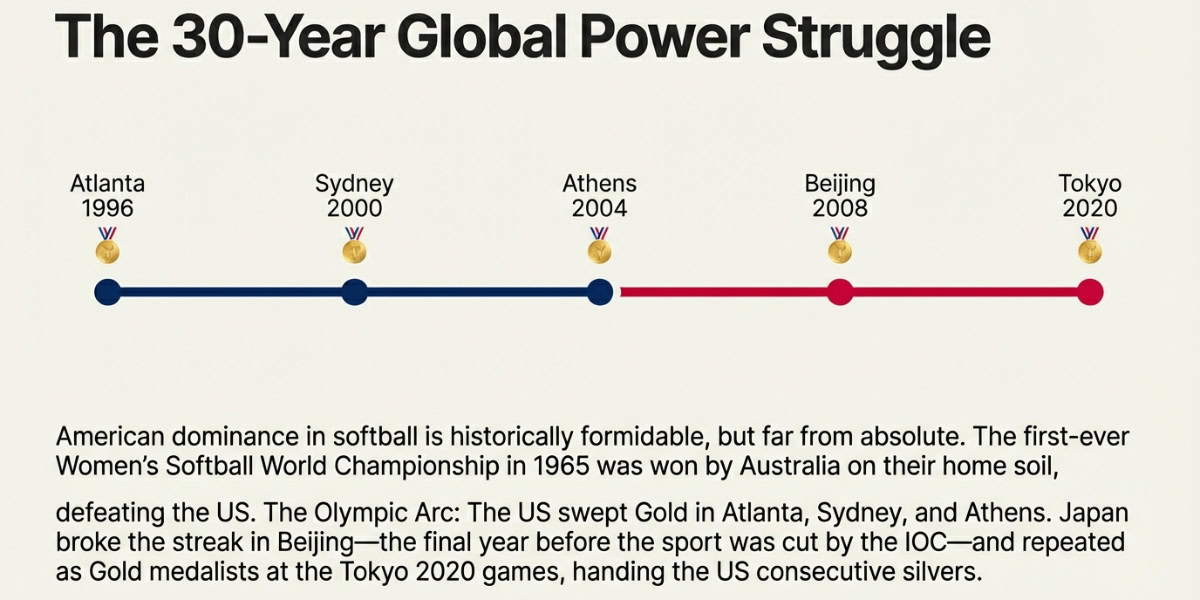
The US–Japan rivalry has defined international fastpitch for three decades. Both programs enter the 2028 cycle as the two most decorated nations in the sport’s Olympic history — a rivalry that will play out in front of an American crowd for the first time since 1996.
8. The 2028 Olympic Softball Tournament Won’t Actually Be Played in Los Angeles
Softball is officially back for the LA 2028 Olympics — confirmed by the IOC, ratified by the LA City Council, and fully venue-planned. But the tournament won’t be in Los Angeles. The games will be held at Softball Park in Oklahoma City, Oklahoma — 1,243 miles from the LA venue cluster.
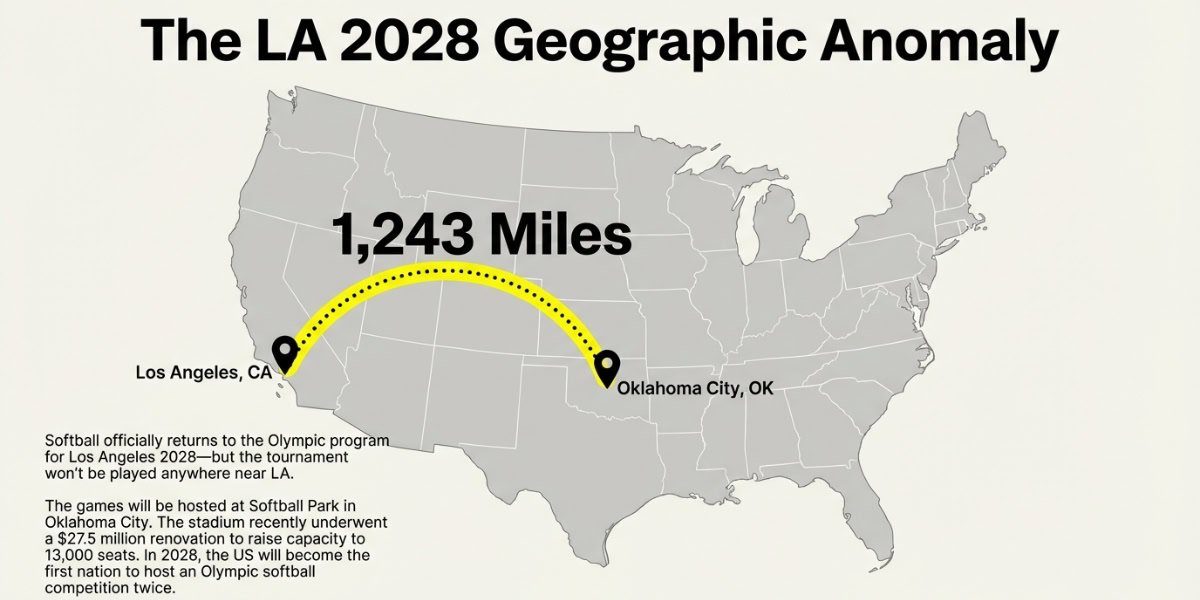
The stadium recently completed a $27.5 million renovation, adding an upper deck and raising capacity to 13,000 seats. It’s the same venue that hosts the Women’s College World Series every summer. In 2028, the US will become the first nation to host an Olympic softball competition twice, with the first being Atlanta 1996.
The College Game Has Changed Fast
9. Oklahoma Won Four Straight NCAA Titles — Then the Dynasty Ended in 2025
The Oklahoma Sooners won the Women’s College World Series in 2021, 2022, 2023, and 2024 — four consecutive national championships, a record that had never been achieved in the tournament’s history. In 2023 alone, they finished 61–1, setting the NCAA record for most wins in a single season.
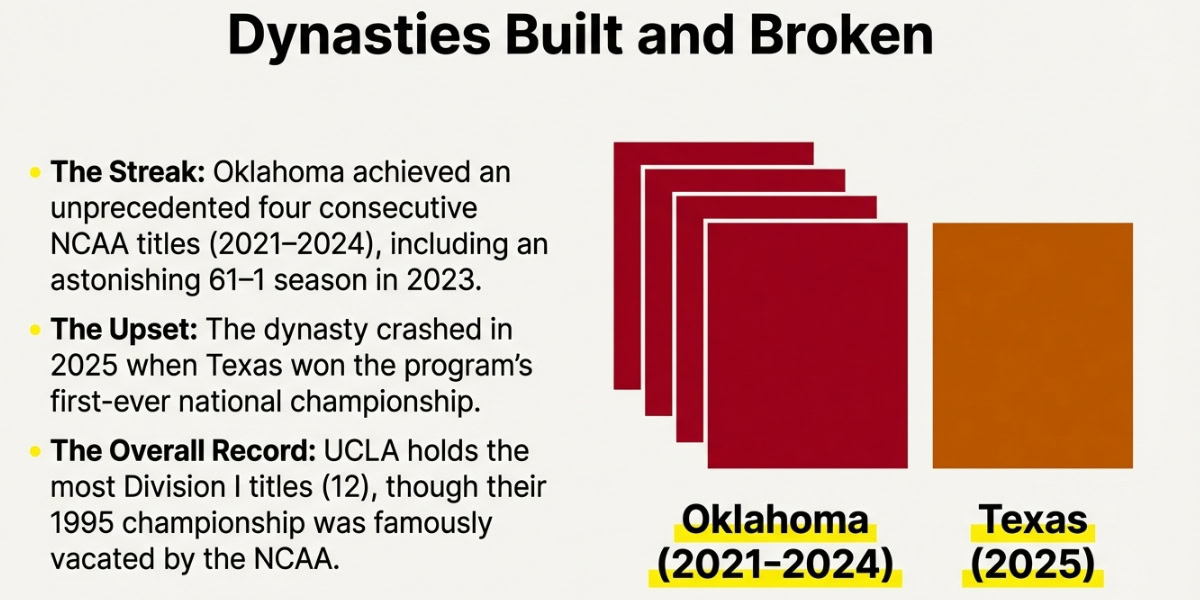
The 2025 season ended the run. Texas Tech knocked out the defending champions in the WCWS semifinal, and Texas defeated Texas Tech in the championship series, winning the program’s first national title in its history. It was the first time since 2020 that a team other than Oklahoma held the trophy.
10. UCLA Has More NCAA Softball Titles Than Any Other Program — But the Number Has an Asterisk
UCLA has 12 recognized NCAA Division I softball national championships — more than any other program. The Bruins won the inaugural title in 1982, defeating Fresno State in Omaha, and have captured consecutive titles on three separate occasions. The caveat: their 1995 championship was vacated by the NCAA due to scholarship violations. Officially, the record stands at 12.
11. The Women’s College World Series Has Been in Oklahoma City Since 1990
With one exception — 1996, when it moved briefly to the Olympic softball venue in Columbus, Georgia — the WCWS has been in Oklahoma City every year since 1990. The first six tournaments were held in Omaha (1982–1987), followed by two in Sunnyvale, California, before Oklahoma City became the permanent home.
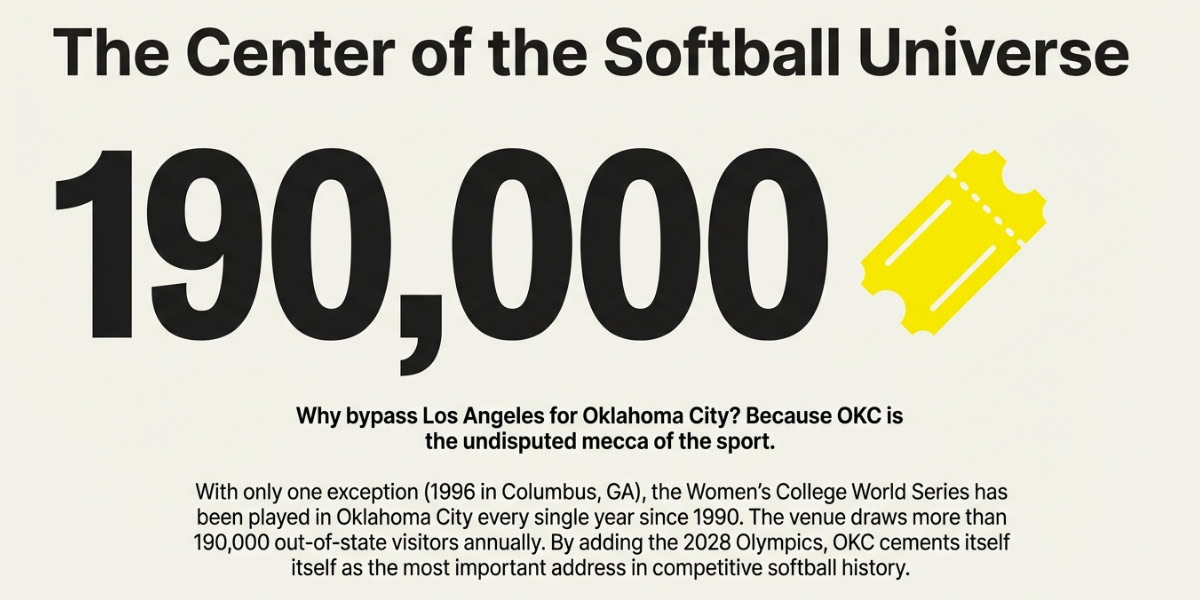
The venue draws more than 190,000 out-of-state visitors during the tournament each year. In 2028, it will host the Olympic softball competition — making Oklahoma City, arguably, the most important address in the sport’s competitive history.
Facts About the Sport That Tend to Surprise People
12. The First Women’s Softball World Championship Was Not Held in the United States
The inaugural Women’s Softball World Championship was played in Melbourne, Australia, in 1965 — not in the country that invented the sport. Australia won the final, defeating the United States on home soil. It was a result that surprised most observers who had expected American dominance from the opening game.
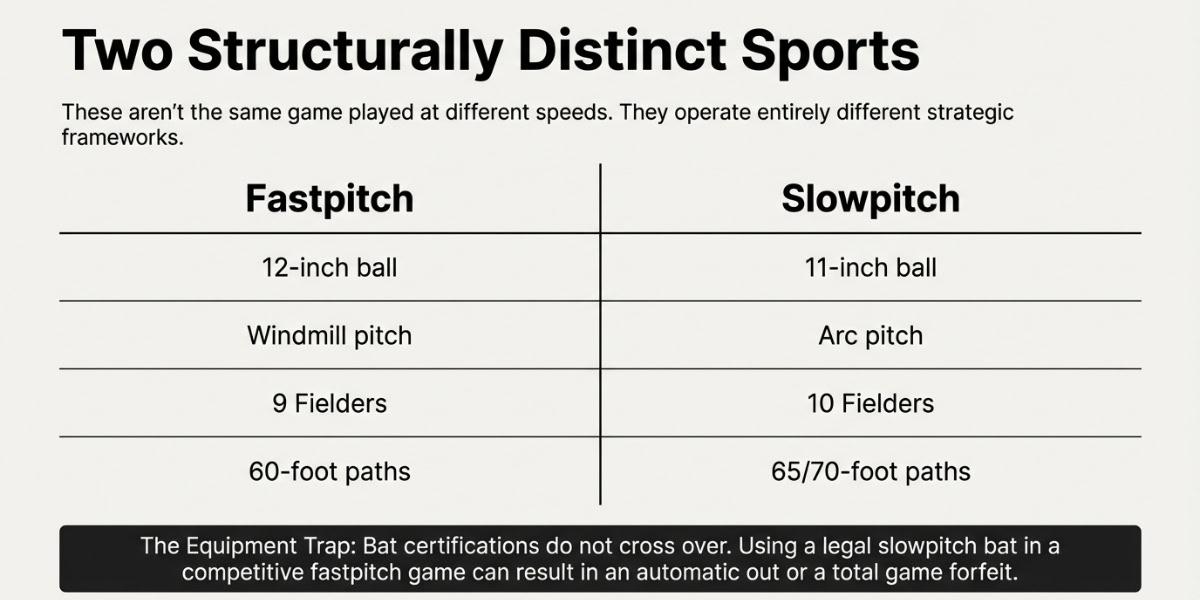
13. Fastpitch and Slowpitch Operate Under Entirely Separate Rule Books
Most people treat them as the same game at different speeds. They are structurally distinct sports. Fastpitch uses a 12-inch ball, a windmill pitching motion, 9 fielders, and 60-foot base paths. Slowpitch uses an 11-inch ball, an arc pitch, 10 fielders, and a different strategic framework entirely.
Bat certifications do not cross over. A bat legal for slowpitch recreational play may fail fastpitch certification requirements — which matters if you’re buying equipment for a player in a competitive fastpitch program. The consequences of an illegal bat range from an automatic out to a game forfeit, depending on the governing body.
14. The Base Paths Are 60 Feet By Design — Not Just Because the Fields Are Smaller
The 60-foot base distance in softball wasn’t a scaled-down version of baseball’s 90 feet. It was deliberately set to produce a specific pace of play — more stolen base attempts, closer plays at the bag, and faster game flow. The average competitive fastpitch game runs approximately 90 minutes, roughly half the current average MLB game.
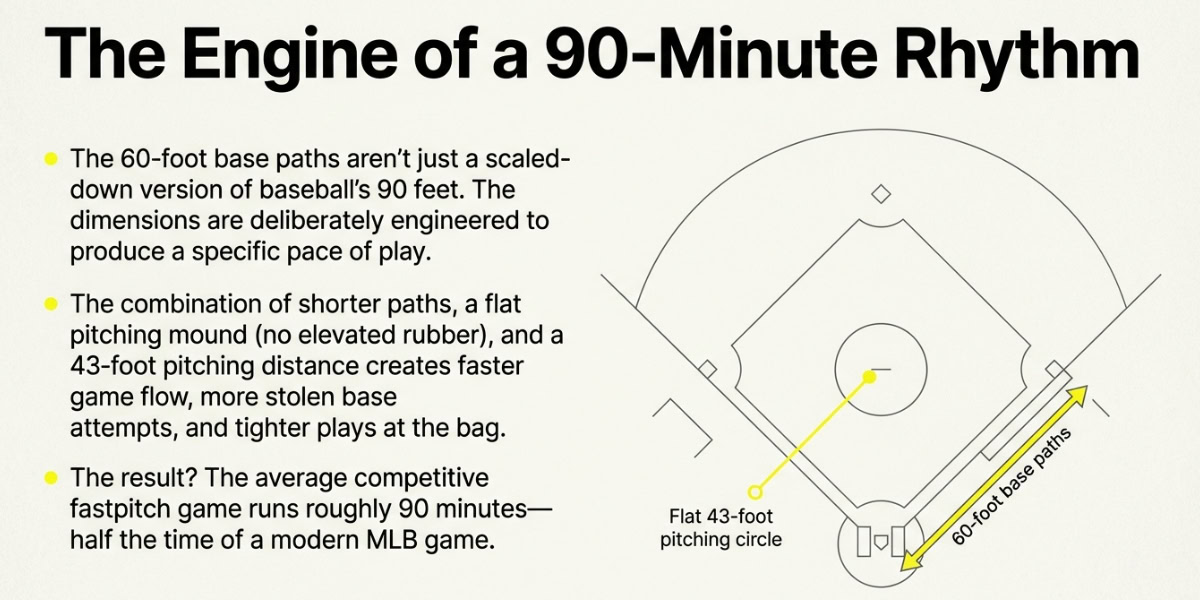
The flat pitching mound (no elevated rubber as in baseball), shorter base paths, and 43-foot pitching distance combine to produce a game with a different strategic rhythm from baseball — not a simpler version of it, but a structurally distinct sport with its own internal logic.
15. The Equipment Has Changed More Than Almost Any Other Part of the Game
Modern composite fastpitch bats use layered carbon fiber construction, multi-wall barrel designs, and drop-specific engineering that didn’t exist 20 years ago. Early composite bats were single-wall, prone to cracking, and required significant break-in before performing reliably. Today’s top bats are engineered with resin systems that loosen under repeated impact — expanding the effective sweet spot over the first 150 to 200 swings in a process that meaningfully changes how the bat performs across its lifetime.
The gap between a properly fit, broken-in composite and an entry-level alloy bat is measurable in exit velocity and carry distance — particularly at the high school and travel ball level. Picking the right drop weight and bat length matters more now than it did when the technology was simpler. The equipment is more capable in both directions.
Softball · Key Moments in the Sport's History
George Hancock improvises a game using a boxing glove and a broomstick after a Harvard-Yale football announcement.
Lewis Rober's team — The Kittens — popularize outdoor play. "Kitten ball" becomes a regional name for the sport.
Walter Hakanson unifies six regional variants under one name. The Amateur Softball Association is established.
Australia defeats the United States in the final on home soil — a result few saw coming.
UCLA defeats Fresno State 2–0 in eight innings in Omaha to claim the inaugural national title.
Softball enters the Olympic program. All games are sold out — the only sport at the 1996 Games to achieve that.
The 2008 Beijing Games become the last to feature softball as a medal event for the next 13 years.
Delayed one year by COVID-19. Japan defeats the US in the gold medal game. Softball is excluded again from Paris 2024.
The Sooners complete an unprecedented four-peat, setting the record for most consecutive national championships.
Pickens breaks her own record (78.2 mph, set in March) in the Super Regionals on May 25. Tennessee wins 1–0. Texas ends the Oklahoma dynasty at the WCWS.
Six nations compete at Softball Park — the same venue as the WCWS. First time the US hosts Olympic softball since 1996.
The Bottom Line
Softball’s full story has more texture than a standard facts list captures. A sport was invented in 45 minutes on Thanksgiving afternoon in 1887. A pitching speed record broken twice in the same season by the same pitcher at the same university — the same university that also produced the previous record holder. An Olympic comeback is playing out in a softball-specific stadium more than a thousand miles from the city whose name is on the Games.