ASA vs USSSA:
Which Stamp Do You Actually Need?
You spent $300+ on a new bat. The last thing you want is for an umpire to pull it at your first tournament. Here's how to make sure that never happens.
Two major governing bodies regulate fastpitch softball in the United States — USA Softball (formerly ASA) and USSSA. Each sets its own performance standards, and each requires a specific certification stamp on the barrel of your bat.
The problem: not all bats carry both stamps. Use the wrong one in the wrong league, and it doesn't matter how good the bat is — it's coming out of your hands before you step in the box.
This guide explains exactly what each certification means, which leagues require which stamp, and what to look for before you buy.
What Each Certification Actually Means
Select a certification to see its performance standard, governing body, and what it requires from a bat.
The National Governing Body Standard
USA Softball is the national governing body for softball in the United States — it was founded as ASA (Amateur Softball Association) in 1933 and rebranded in 2016. The certification standard itself did not change with the rebrand. A bat stamped ASA 2004 is just as legal as one stamped USA Softball today.
- Covers recreational leagues, school ball, and travel programs
- Performance standard: max batted ball speed of 98 mph
- Barrel diameter: 2.25 inches max for fastpitch
- Max length: 34 inches; max weight: 38 oz
- Required by most high school programs (NFHS references it)
- Stamp reads "USA Softball Certified" on newer bats
Technical Specs at a Glance
The Travel Ball Performance Standard
USSSA (United States Specialty Sports Association) governs a large portion of travel ball tournaments across the country. Its bat certification is based on the Bat Performance Factor (BPF) — a measure of how much extra energy a bat transfers to the ball on contact compared to a solid wall. USSSA bats are certified to a 1.20 BPF, which allows for a higher performance ceiling than the USA Softball 98 mph standard.
- Dominant standard in travel ball tournaments nationwide
- Uses BPF (Bat Performance Factor) testing — 1.20 BPF maximum
- USSSA bats are generally hotter than USA-only bats
- Recognizable thumbprint or NTS stamp on the taper
- Not automatically legal in USA Softball or NFHS leagues
- A USSSA-only bat cannot be used in most school ball programs
Technical Specs at a Glance
Varsity and JV Softball Requirements
The National Federation of State High School Associations (NFHS) governs equipment standards for high school softball across the country. For a bat to be legal in NFHS-sanctioned play, it must carry the ASA 2000, ASA 2004, or USA Softball All-Games Certification Mark — and it must not appear on the USA Softball Non-Approved Bats list. A USSSA-only bat is not NFHS legal, regardless of how well it performs.
- References USA Softball certification marks directly
- Must not appear on USA Softball's Non-Approved list
- ASA 2000 or 2004 stamp is still valid for high school play
- USSSA-only bats are not legal at the varsity level
- Dual-stamped bats cover both school and travel requirements
- Check state-level rules — some associations add further restrictions
High School Compliance Checklist
The Strictest Standard in Fastpitch
The NCAA maintains its own approved softball bat list and conducts barrel compression testing before major tournaments. This is a separate standard from both NFHS and USA Softball. A bat that passes inspection in October may fail in May if its compression has changed — composite barrels that have been heavily broken in can exceed compression limits over time. If you're a college-bound player, this is the standard to understand before spending $400 on a bat.
- Maintains its own NCAA-specific approved bat list
- Compression tested at tournaments — not just at purchase
- A bat that was legal last fall may fail spring inspection
- Over-broken-in composites are a known compliance risk
- College coaches verify equipment; don't assume what works in travel ball works here
- Review ncaa.org softball rules before any major equipment purchase at 16+
College Compliance Checklist
USA Softball vs USSSA — Side by Side
The clearest way to understand the difference. Hover any row for more context.
👆 Scroll sideways to compare →
| Category | 🏷️ USA Softball (ASA) | ⚡ USSSA Fastpitch |
|---|---|---|
| Governing Body | USA Softball — national governing body. Formerly the Amateur Softball Association (ASA), rebranded 2016. | USSSA — United States Specialty Sports Association. Primarily travel ball. |
| Performance Standard | Max 98 mph batted ball speed. Speed-based testing standard. | 1.20 BPF (Bat Performance Factor). Ball rebounds up to 20% faster than a solid wall. |
| Performance Level | More conservative. Lower performance ceiling by design. Lower pop |
Higher performance allowed. USSSA-only bats are typically hotter. Higher pop |
| Who Uses It | Recreational leagues, school ball, high school (NFHS), most travel ball programs. | Travel ball tournaments. Some recreational and club leagues. |
| Stamp Appearance | "USA Softball Certified" on barrel. Older bats: "ASA 2004" or "ASA 2000." | Thumbprint logo or NTS stamp (newer bats post-2021) on the taper. |
| Interchangeable? | USA/ASA bats are NOT legal in USSSA-only leagues. Not USSSA legal |
USSSA-only bats are NOT legal in USA Softball or NFHS leagues. Not USA legal |
| Dual-Stamp Possible? | Yes — most competitive bats carry both stamps. A dual-stamped bat is legal in both USA Softball and USSSA leagues. This is the safest option for most players. Dual stamp = best coverage |
|
| High School Legal? | Yes — NFHS references USA Softball certification directly. NFHS legal |
Not unless the bat is also USA/ASA stamped. Not NFHS legal alone |
| Old Stamps Still Valid? | Yes. ASA 2000 and ASA 2004 stamps remain valid for most USA Softball play. | Original thumbprint stamp still legal. New NTS stamp applies to bats made after Sept. 2020. |
Find the Right Certification for Your League
Select your level of play to see which stamp your bat must carry.
Dual-Stamp Bats: The Safest Option for Most Players
Most modern competitive fastpitch bats carry both the USA Softball and USSSA stamps — giving you legal coverage across travel ball and school play with a single bat.
Where to Find the Stamp
Certification stamps are printed on the taper — the section between the handle and barrel. On a dual-stamped bat, you'll see both the USA Softball certification mark and the USSSA thumbprint or NTS logo within a few inches of each other. On the product page, look for "USA/USSSA certified" in the specifications section.
When a Single Stamp Makes Sense
If you only play in USSSA tournaments and never touch school ball, a USSSA-only bat is fine — and may perform at a higher level than a dual-stamped version of the same model. Conversely, if your program is USA Softball only, you don't need USSSA coverage. But for most players who cross between both? Dual stamp every time.
Always Verify Before You Buy
Certifications can change. Bats get added to the non-approved list after purchase. Manufacturers occasionally release the same model with different stamps in different regions. The safest habit: check the USA Softball certified equipment list directly before committing to any purchase above $150.
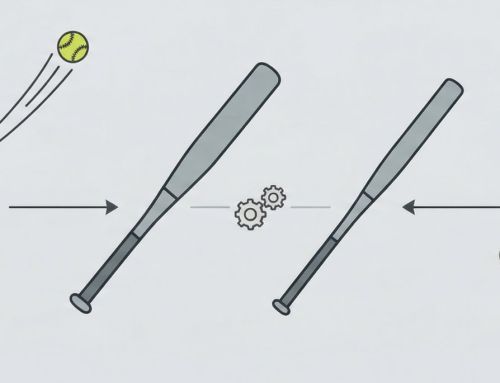
What a dual-stamped bat looks like on the taper
Both stamps on the same bat = legal for USA Softball leagues, NFHS school ball, and USSSA travel tournaments
Bat Certification Questions Players Actually Ask
Self-contained answers you can act on immediately.
Yes — they are the same certification under different names. The Amateur Softball Association (ASA) rebranded as USA Softball in 2016. The performance standards did not change with the rebrand. A bat stamped "ASA 2004" is still legal for USA Softball-sanctioned play today.
When you're shopping, bats made before 2016 will show an ASA stamp. Bats made after the rebrand will show the USA Softball certification mark. Both are valid. If a league says "ASA bat required," any bat with either stamp will qualify.
Only if it also carries a USA Softball / ASA stamp. A USSSA-only bat is not legal for NFHS-sanctioned high school play. The NFHS bat rule requires the ASA 2000, ASA 2004, or USA Softball All-Games Certification Mark — and the bat must not appear on the USA Softball Non-Approved list.
A dual-stamped bat (USA Softball + USSSA) is legal at the high school level. This is one of the main reasons dual-stamp coverage matters for players who compete in both travel ball and school programs. See our best fastpitch softball bats overview for verified dual-certified options.
The bat gets pulled before your at-bat — or, if the illegal bat is discovered after you've already reached base on a hit, you'll be called out and the bat confiscated for the remainder of the game. In tournament play, this can mean immediate disqualification of the at-bat result.
In USSSA leagues specifically, players found using an altered bat face a 2–5 year ban from sanctioned events. Using an uncertified bat is treated as a rules violation, not a mistake. The consequence depends on the tournament director and how the rules are written for that event, but the risk is never worth it — especially on a $300+ investment.
Yes — but the difference is meaningful primarily for slowpitch. In fastpitch, most dual-certified bats perform at or near the same level because both standards (USA Softball's 98 mph test and USSSA's 1.20 BPF) produce very similar performance ceilings for fastpitch barrels.
Where this matters: a handful of bats are built to the USSSA 1.20 BPF standard only and intentionally push the performance envelope. These bats will feel hotter than their dual-certified equivalents. The Easton Ghost, for example, has historically been an ASA/USA-only certified bat — it meets the stricter standard, not the higher BPF. That's a deliberate engineering choice, not a limitation. The certification type shapes barrel construction decisions from the ground up.
In most cases, yes. Bats with the ASA 2000 and ASA 2004 certification marks are still accepted in USA Softball-sanctioned play and NFHS high school games — provided the bat does not appear on the USA Softball Non-Approved (banned) bat list. The banned list is updated regularly and is available at usasoftball.com.
If your bat's model is on the Non-Approved list with a 2000 or 2004 stamp, it is no longer legal regardless of age. This happens when compression testing reveals a bat has drifted outside of performance limits — either from manufacturing variation or because the barrel has changed over time with use. Always cross-check before a season starts.
The break-in process itself doesn't affect your certification stamp or legal status — but it can push a composite barrel's compression outside of legal limits if done incorrectly. Rolling a bat (mechanically compressing the barrel) is considered bat doctoring and is illegal in sanctioned play. Shaving — removing material from inside the barrel — is also illegal and voids both the warranty and any certification.
A properly broken-in composite bat that has been hit with regulation softballs using the correct rotation method should stay within compliance limits throughout its usable life. The risk of failed compression tests at the NCAA level comes from natural break-in, not deliberate alteration — which is why college players need to track their bat's condition season to season. Our complete break-in guide for composite fastpitch bats covers the right method in full.
More From AllAboutFastpitch
Everything you need to pick the right bat, understand the specs, and compete at your level.
- USA Softball — Certified Equipment List Official approved bats & gear — updated regularly
- USA Softball — National Governing Body Rules, leagues, and player resources
- NFHS — High School Softball Rules Varsity-level bat certification requirements
- USSSA Softball Travel ball tournament rules & bat standards