The Decision That Costs Players More Than Money
Picking the wrong fastpitch softball bat is a more common mistake than most players admit.
You spend $350 on a two-piece composite that your teammate swears by — then spend an entire season fighting the weight, losing bat speed, and wondering why the ball keeps going soft off the barrel. The bat wasn’t bad. It just wasn’t right for you.
Here’s what nobody puts in big letters on the product page: fit matters more than hype. Barrel technology, connection systems, and dual-wall engineering are all meaningful — but only if the bat’s length, weight, and swing balance actually match your mechanics.
This guide covers every variable you need to understand before you buy. By the end, you’ll know exactly what to look for — and why it matters at the plate.

Quick Takeaways
- ★ Drop weight is the single most impactful spec—get it wrong and bat speed suffers.
- ★ Composite bats need a break-in period; alloy bats are ready out of the wrapper.
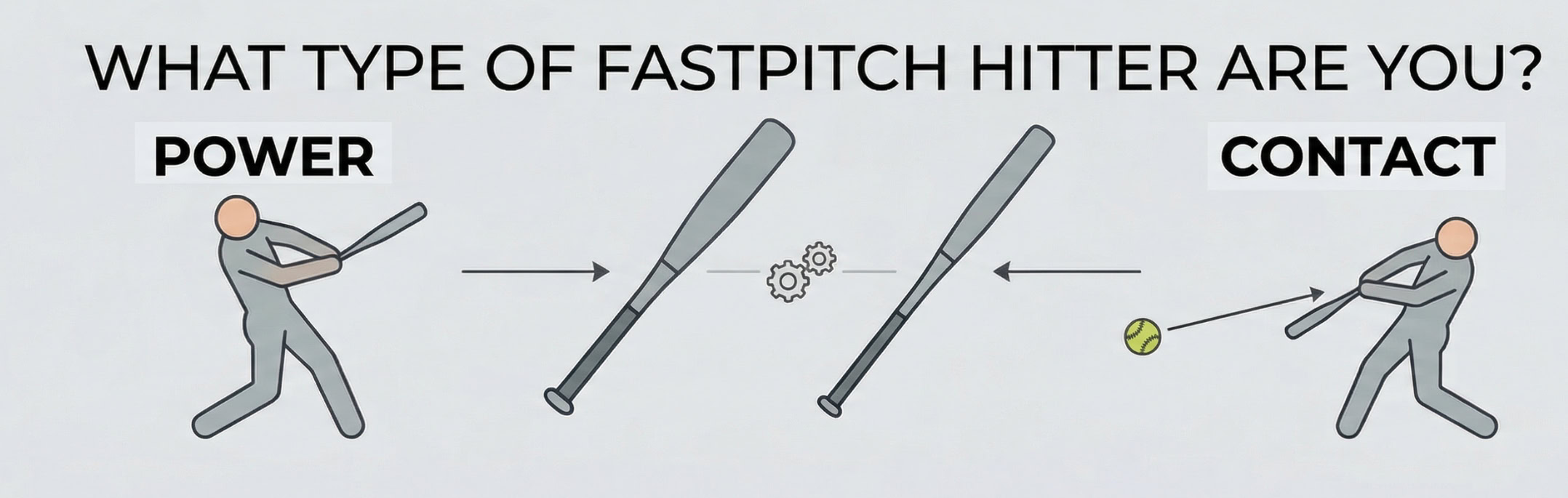
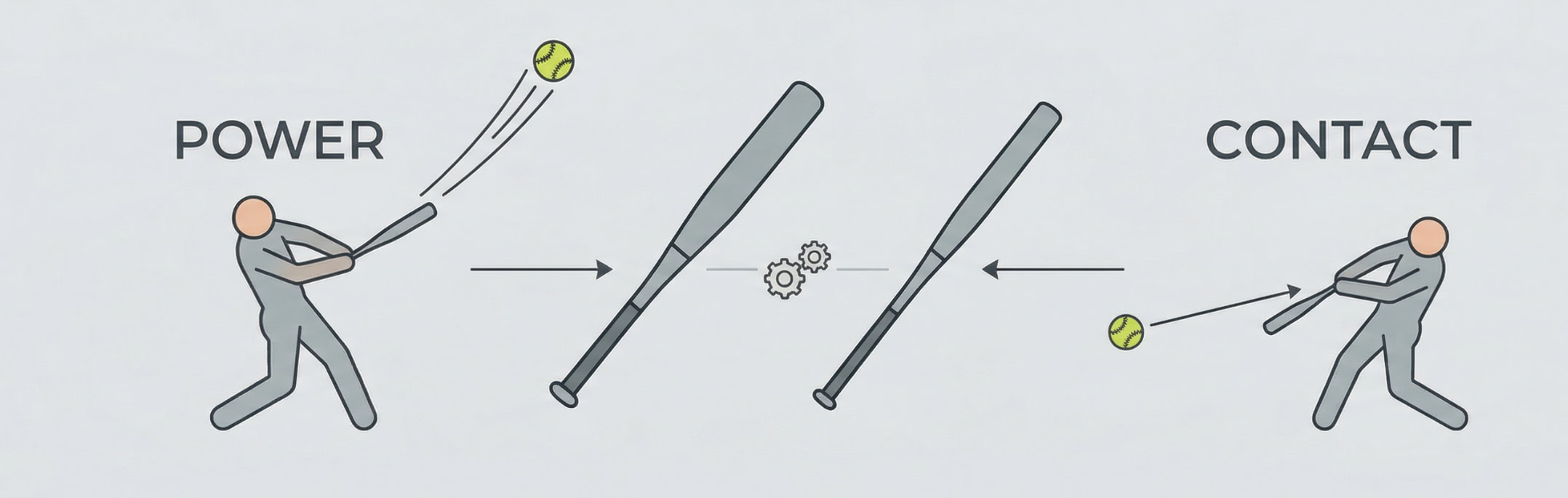
- ★ Balanced bats favor contact hitters; end-loaded bats favor power hitters.
- ★ Always verify your certification stamp—missing logos can make a bat illegal for play.
- ★ The right bat isn't the most expensive one—it's the one that fits your swing.
Start With Drop Weight — It Affects Everything
Drop weight is the difference between a bat’s length (in inches) and its weight (in ounces). A 33-inch bat that weighs 23 ounces is a -10 drop. A 33-inch bat at 25 ounces is a -8 drop.
The higher the drop number, the lighter the bat feels relative to its length.
This single spec shapes your swing experience more than anything else on the label. A bat that’s too heavy causes your swing to drag through the zone. Too light, and you sacrifice the natural momentum that drives the ball into the gaps.
Drop weight is one of the most misunderstood specs in fastpitch equipment. If you want the full breakdown — including how drop interacts with your hitting style, age, and swing mechanics — read our fastpitch bat drop weight guide.
What drop weight should you use?
Most fastpitch players at the high school and travel ball level play with a -10 drop, which provides a strong balance between bat speed and authority on contact. Players with longer, more experienced swings often move to -9 or -8 to add mass behind the ball — particularly power hitters who can still maintain bat speed with the added weight.
Youth players (12U and under) typically benefit most from -11 to -13 drop bats, where lighter weight supports proper mechanics and confidence at the plate.
A practical test: hold the bat handle with one hand and extend your arm parallel to the ground. If you can hold it steady for 30 seconds without strain, the weight is in the right range for your current strength level.
Drop weight by age — a quick reference
| Age Range | Recommended Drop |
|---|---|
| 8 & under | -12 to -13 |
| 8–12 | -11 to -12 |
| 12–14 | -10 to -11 |
| 14+ (HS/Travel) | -9 to -10 |
| Advanced/Power | -8 to -9 |
Bat Length — Sizing for Plate Coverage and Swing Control
Length affects plate coverage, swing mechanics, and your ability to get to pitches on the outer half.
Too long, and the barrel drags — you’ll see your contact rate dip on inside pitches. Too short, and you’re giving up reach on pitches away, which limits your ability to cover the full strike zone.
How to measure for the right bat length
Three methods work reliably:
- Chest-to-fingertip method: Stand upright and extend one arm straight out to the side. Measure from the center of your chest to your fingertips. That number (in inches) gives you a strong starting-point length.
- Arm hang method: Stand the bat upright next to you, with the knob touching your palm. The barrel should rest on the floor — if it reaches higher than the floor, it’s likely too long.
- Knob-to-chest method: Place the knob at the center of your chest and point the bat straight out. If you can comfortably grab the barrel with your fingertips, the length is appropriate.
Most high school players land between 32 and 34 inches, with 33 inches being the most common across competitive travel ball programs.
Composite vs. Alloy — What the Material Actually Means
The material you choose affects break-in time, feel on contact, cold-weather performance, and price point. Neither material is universally superior — they each have real tradeoffs.
Composite bats
Composite bats are built from layered carbon fiber, which gives engineers precise control over how the barrel flexes and how energy transfers to the ball at impact. The result is a larger, more forgiving sweet spot and noticeably reduced vibration on off-center hits.
The tradeoff: composite barrels require a proper break-in period — typically 150 to 200 hits rotating the bat evenly around the barrel. Performance doesn’t reach its ceiling until that process is complete. Composite bats also perform below their best in temperatures under 60°F, where the carbon fiber stiffens, and the trampoline effect decreases.
Alloy (aluminum) bats
Alloy bats are ready to perform from the first swing — no break-in required. They tend to deliver a more direct, stiffer feel on contact, which some players prefer for the feedback it provides. They’re generally more durable in cold weather and carry a lower price point at equivalent performance tiers.
The tradeoff: the sweet spot is typically tighter than composite, and vibration on mishits can be more pronounced.
Which should you choose?
If you’re an experienced player in a competitive travel or high school program — and you’re committed to breaking the bat in properly — composite typically offers a higher performance ceiling. If you play in cold climates, need a game-ready bat immediately, or are working within a tighter budget, alloy is a reliable, honest choice.
Balanced vs. End-Loaded — Matching Swing Weight to Your Hitting Style
This is where many players buy the wrong bat, even when everything else is right.
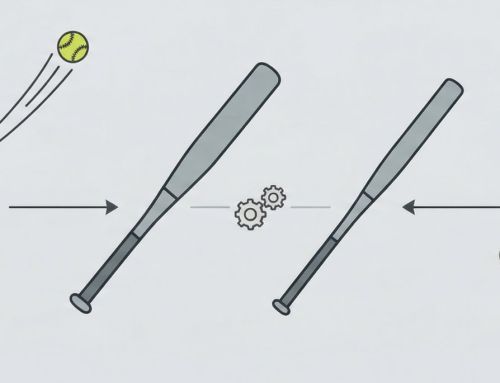
Balanced bats distribute weight evenly from the knob to the end cap. They swing faster through the zone and give you better control of off-speed pitches and inside pitches that require quick adjustment. Contact hitters, slappers, and gap-to-gap hitters are best served by a balanced swing weight.
End-loaded bats concentrate extra mass toward the barrel, creating a heavier swing feel that generates additional momentum at impact. When a player with strong mechanics connects squarely, that extra weight translates into more distance and higher exit velocity. The tradeoff is a slower swing, which is why end-loaded bats are purpose-built for power hitters who can maintain bat speed with the added weight.
A simple diagnostic: if your natural game involves putting the ball in play consistently, working gaps, and valuing contact rate — go balanced. If your strength is driving the ball with authority and you’re regularly pulling pitches with power, end-loaded deserves a serious look.
Certification Stamps — Don’t Skip This Step
Every competitive fastpitch league requires bats to meet specific performance and safety standards, which vary among governing bodies.
The four primary certifying organizations for fastpitch softball are USA Softball (ASA), USSSA, NSA, and ISA. Each issues its own stamp, and your bat must display the correct logo (or logos) to be legal for play in your league.
Most current competitive bats carry dual USA Softball/USSSA stamps, which cover the majority of travel ball and high school programs. Before purchasing, confirm with your coach or league administrator exactly which certifications are required — a bat missing the right stamp can be pulled from use, regardless of its performance.
FAQ: Can I use the same bat across different leagues?
In most cases, yes — dual-stamped bats cover both USA Softball and USSSA requirements, which represent the majority of competitive fastpitch programs. If you play in ISA or NSA leagues specifically, verify separately. The stamp is printed on the bat’s taper, and a bat used in an uncertified league risks being ruled illegal, even mid-season, if equipment is reviewed.
One-Piece vs. Two-Piece Construction
Construction type affects how energy moves through the bat on contact and how much vibration reaches your hands.
One-piece bats — typically alloy — offer a stiffer, more direct connection between barrel and handle. Hitters who make consistently square contact often prefer the immediate feedback and the power transfer a one-piece design provides. The downside: mishits sting.
Two-piece bats join the barrel and handle at a connection point, which absorbs vibration and allows for slight barrel flex at impact. That flex — sometimes called the “whip effect” — can add energy to the ball when timed correctly. Two-piece designs dominate the composite bat market because the construction pairs naturally with the flexibility of carbon fiber.
If you’re still developing your mechanics and making frequent off-center contact, a two-piece composite is more forgiving. If your contact is consistent and you want maximum direct feedback, a one-piece design is worth testing.
What’s a Realistic Budget for a Competitive Fastpitch Bat?
Here’s an honest breakdown of what you get at different price points:
| Price Range | What to Expect |
|---|---|
| $75–$150 | Alloy bats, entry-level composite; reliable for recreational play and youth development. |
| $150–$250 | Mid-tier composite and hybrid; solid performance ceiling, good for developing travel players. |
| $250–$400 | High-performance composite; two-piece construction, advanced barrel technology, competitive sweet spot. |
| $400+ | Elite-tier composite; top-end barrel engineering, optimized connection systems, designed for serious competitive play. |
The $250–$350 range delivers legitimate performance for the majority of high school and travel ball players without the diminishing returns that come at the very top of the market. Spending $500 on a bat makes sense only when your mechanics are consistent enough to extract the difference.
Making the Right Call
Choosing a fastpitch softball bat comes down to this: understand your swing, match the specs to your game, and resist the pull of marketing language that doesn’t translate into real performance.
Drop weight is your first filter. Length comes next. Then material, construction, and swing balance — each layered on top to narrow the field to bats that actually match how you hit.
For a full breakdown of the top-performing options on the market right now — tested and evaluated across all these criteria — check out our complete guide to the best fastpitch softball bats.
We’ve done the work to separate the bats that deliver from the ones that just look good on paper. The right bat is in there.