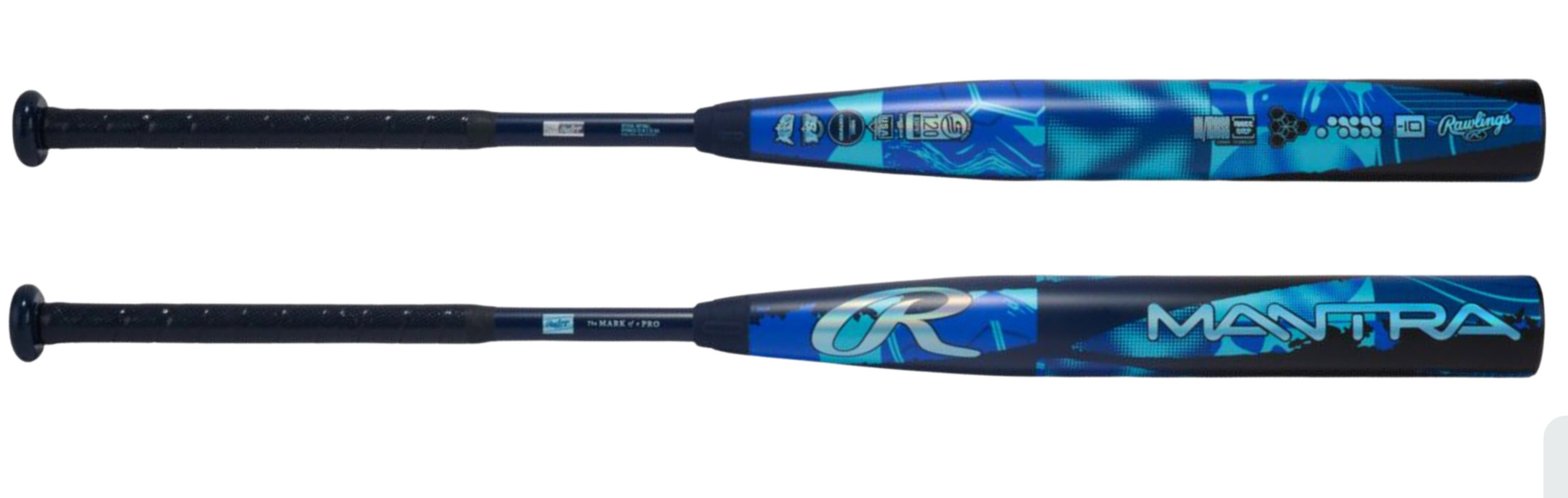
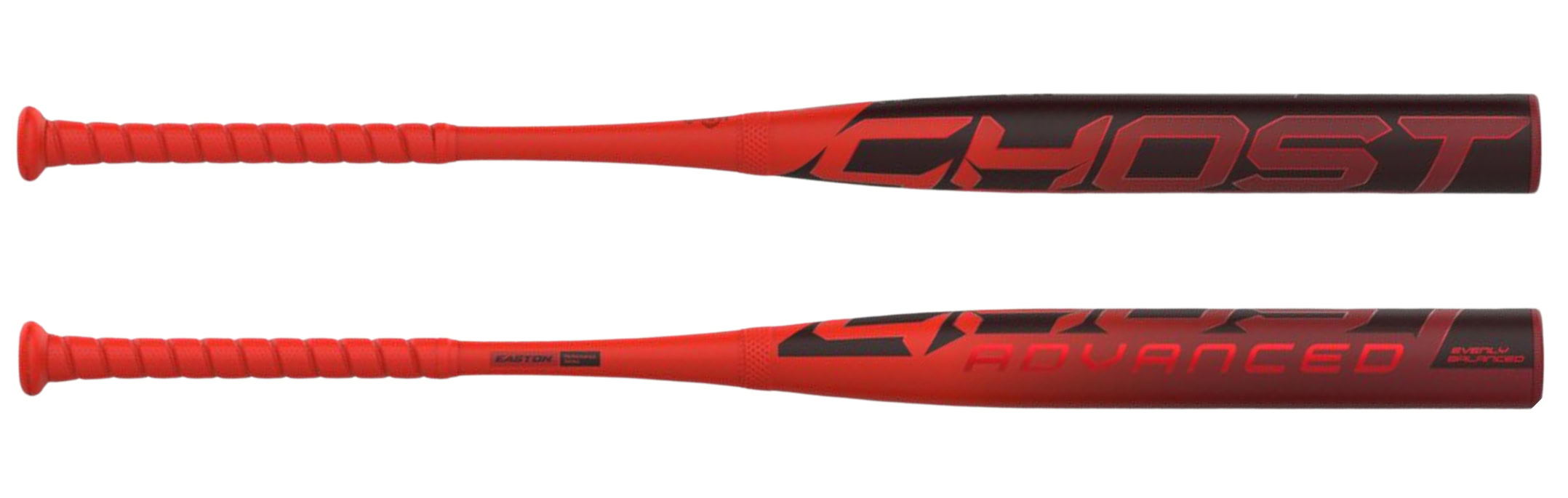
Takes 150-200 swings to break in fully, but once it does, the bat stays consistent through multiple seasons.
Built for contact hitters, slappers, and players who want forgiveness on slightly off-center swings.
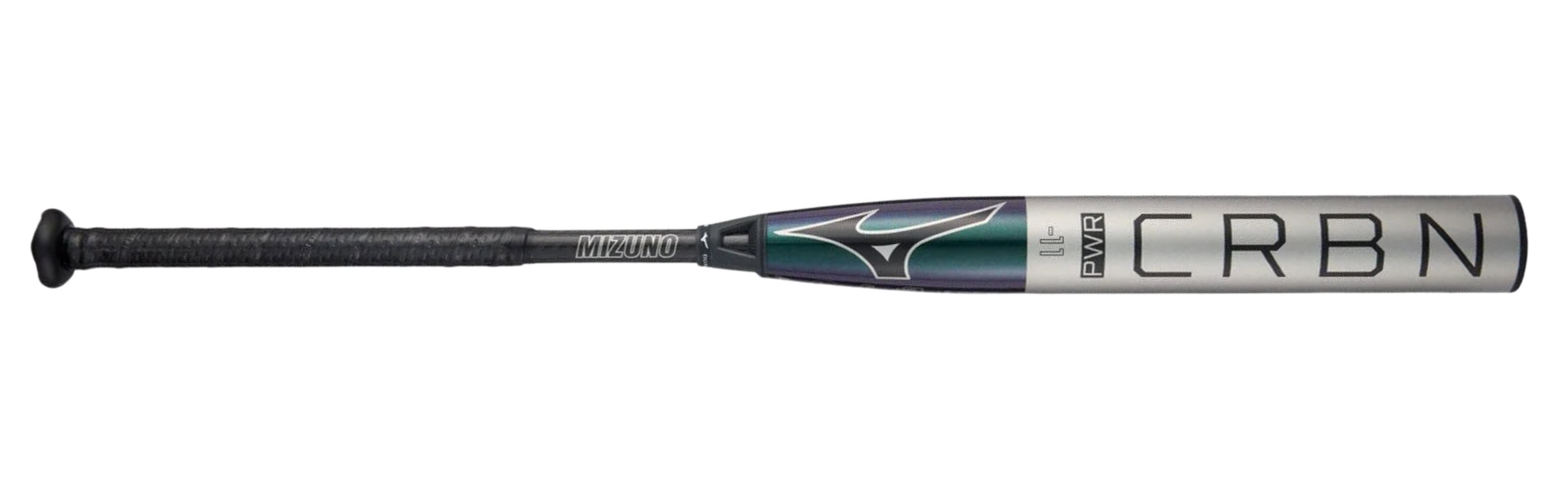
The Dual Frequency Dampener handles vibration at specific frequency points without adding extra flex. Reaches usable performance by swing 75-100, so it's ready for tournament play quickly. Built for gap hitters and power-conscious players with solid mechanics who want direct feedback.
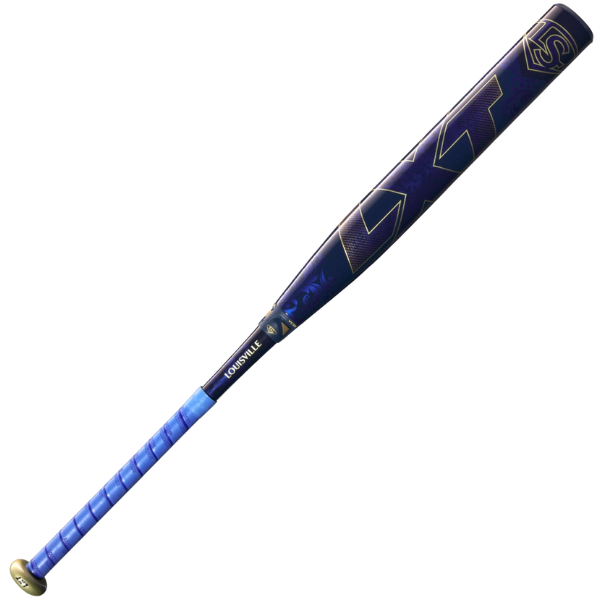
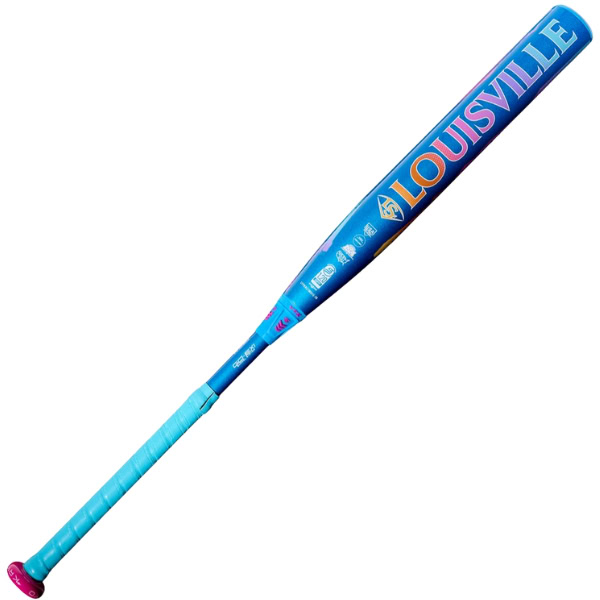
Louisville Slugger
LXT
Contact & Consistency
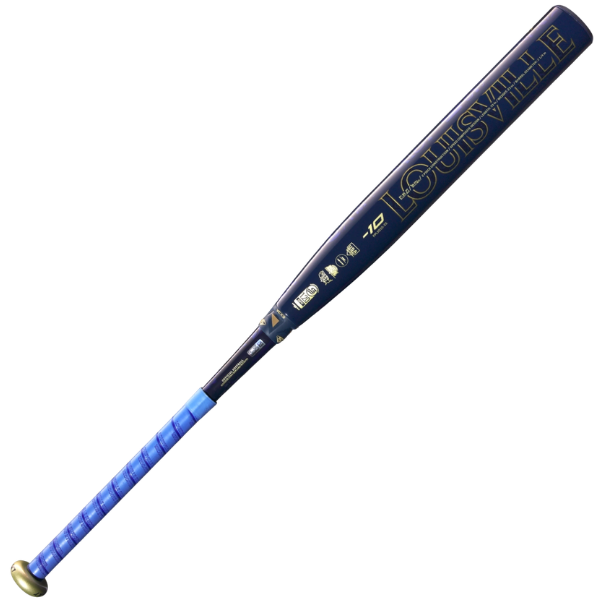
One-piece composite with PBF Speed barrel. The VCX2 connection flexes to absorb vibration on off-center swings without muting the feel of solid contact. Takes 150-200 swings to break in, but the performance stays consistent across multiple seasons.
Built for slappers and contact hitters who want forgiveness.
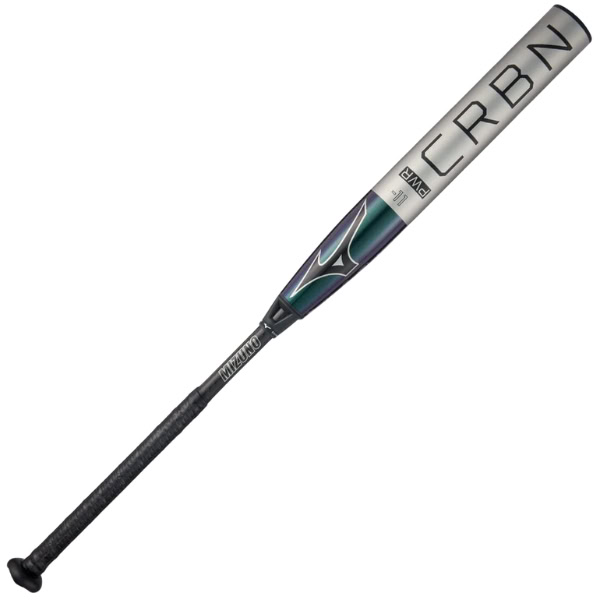
Mizuno
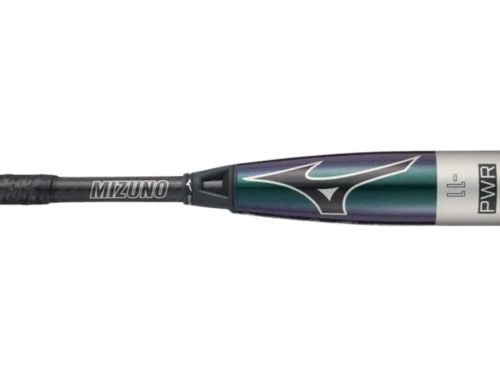
F23-PWR CRBN
Precision & Exit Velo
Two-piece composite with Black Onyx Carbon barrel and low compression design. The Dual Frequency Dampener handles vibration without adding flex, keeping the connection stiff and direct. Hot out of the wrapper—usable by swing 75-100.
Built for gap hitters and power-conscious players who want peak exit velocity on center contact.
The Core Difference: Two Approaches to Barrel Performance
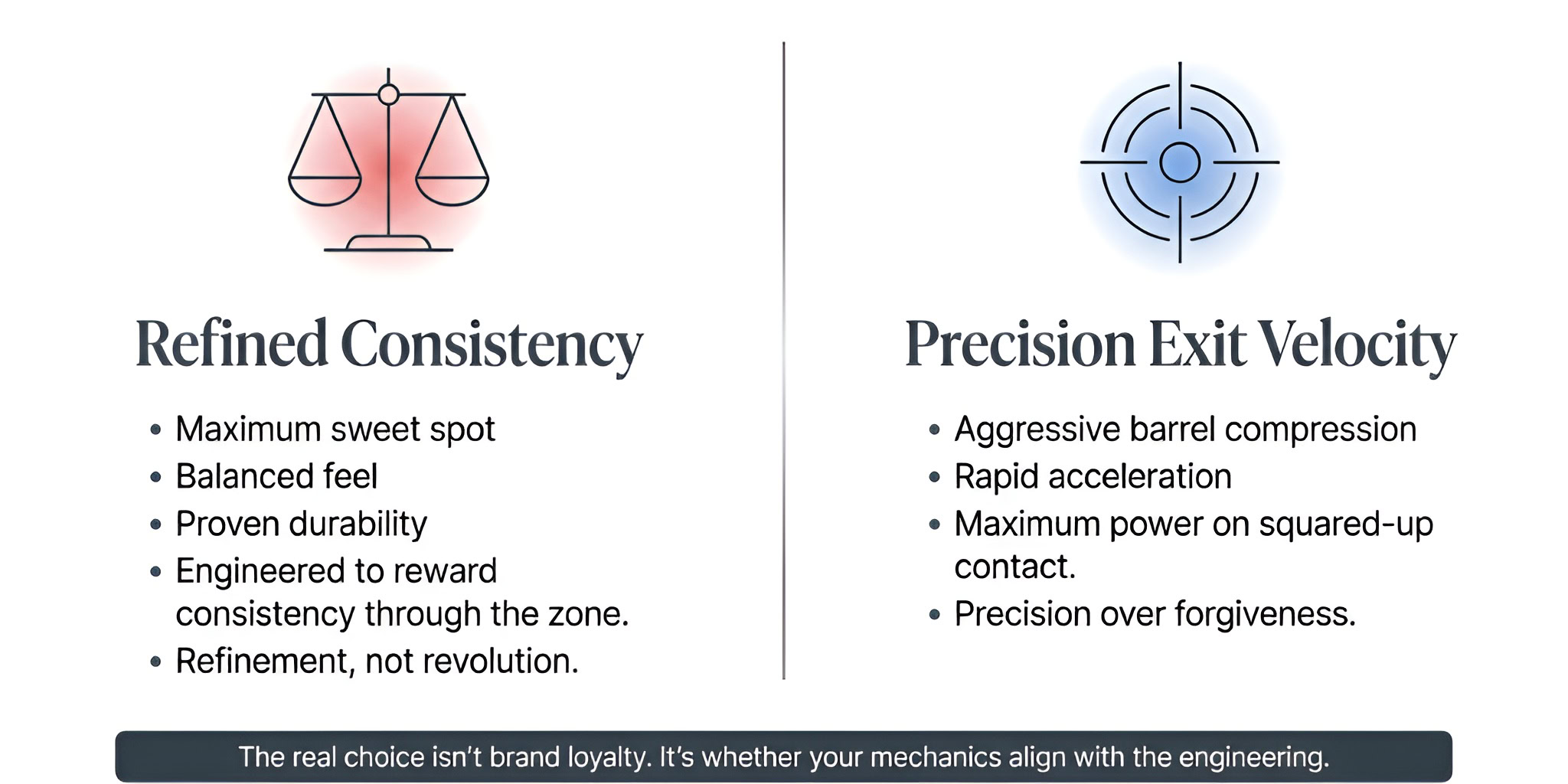
When two bats sit at nearly identical price points ($399 LXT, typically $350–$400 Mizuno depending on sales), hit from the same competitive circles, and show up in lineup cards from 14U travel to college, the real choice isn’t about brand loyalty. It’s about engineering philosophy and whether your swing mechanics align with how each bat is designed to respond.
The Louisville Slugger LXT is engineered around one central principle: maximum sweet spot consistency through balanced feel and proven durability. Louisville Slugger didn’t reinvent the wheel with the 2025 model—and that’s the point. The PBF Speed Composite barrel, VCX2 Connection, and COPA End Cap have worked for years. This year’s iteration represents refinement, not revolution.
The Mizuno F23-PWR CRBN takes a different path: maximum exit velocity on squared-up contact paired with aggressive barrel compression and rapid performance acceleration. Mizuno’s philosophy with the F23-PWR-CRBN is precision engineering for hitters who can control their swing mechanics and prioritize power output over forgiveness.
These aren’t minor distinctions. They reshape how each bat feels in your hands, how it responds to mishits, how long it takes to reach performance ceiling, and ultimately, which hitter profile benefits most.
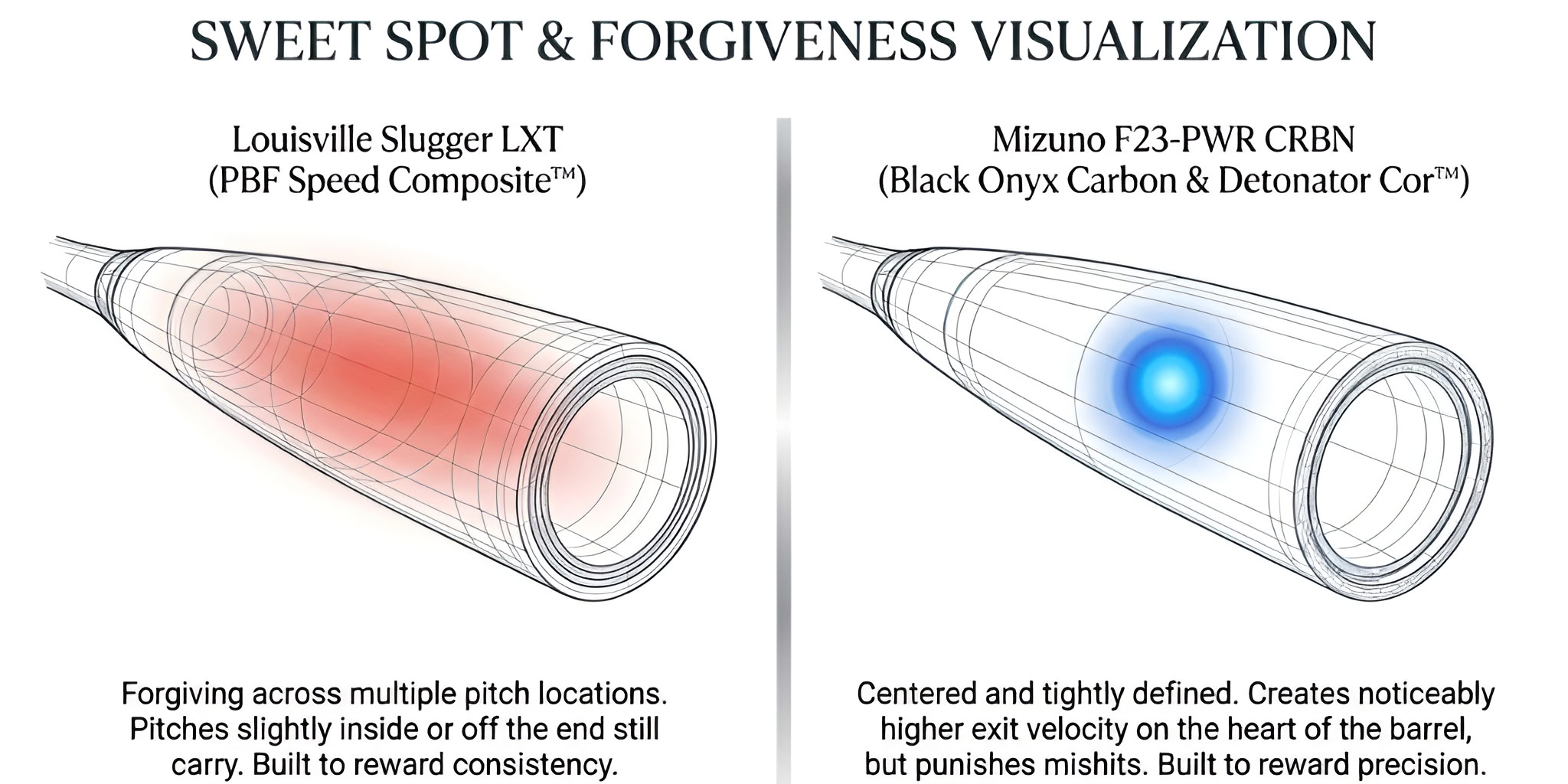
The Engineering Reality: Connection Systems Explained
This is where most bat comparisons get vague or resort to marketing language. Let’s translate the technology into what actually happens when you step into the box.
Louisville Slugger LXT: The Flexible Connection
The VCX2™ Vibration Connection System is an elastomeric (flexible, rubber-like) material positioned between barrel and handle. Here’s what that actually does:
When you make contact with the ball, the barrel wants to flex. The handle wants to stay rigid. The VCX2 allows independent movement between them—the barrel can bend and spring back while the handle absorbs what would otherwise travel up your hands as vibration sting.
On a solid, centered hit: The barrel flexes efficiently, transfers energy smoothly into the ball, and the connection keeps everything feeling connected. You get clear feedback that you barreled it.
On an off-center hit (inside the ball, off the end, slightly jammed): The VCX2 connection absorbs the worst of the vibration, converting harsh sting into a dull, manageable sensation. For players taking 100+ swings on a tournament Sunday across multiple games, this matters. Hand fatigue compounds. A bat that keeps sting minimal late in the day is genuinely valuable.
Trade-off: Because the connection flexes, you lose some of the ultra-direct, stiff feel that power hitters sometimes prefer. If you hit the ball slightly off-center and expect maximum feedback to correct your next swing, the LXT’s dampening might mask that information slightly.
Mizuno F23-PWR CRBN: The Dual-Point Dampening System
The Dual Frequency Dampener™ operates on a completely different principle. Instead of a single flexible material, it targets vibration at two specific frequency points—essentially filtering out the exact frequencies that create hand sting.
Think of it like noise-canceling headphones: instead of padding, you’re using targeted cancellation at the frequencies where sting occurs.
On a solid hit: The stiff carbon handle keeps energy transfer direct and crisp. You feel a tight, connected sensation—minimal flex, maximum feedback. Power hitters often prefer this feedback because it tells them immediately whether they caught the sweet spot.
On an off-center hit: The Dual Frequency Dampener absorbs vibration at those two specific frequency ranges, but because the overall connection is stiffer than the LXT’s, you still get more feedback about where on the barrel you made contact. It’s a compromise: less overall sting than a truly stiff bat, but more directional information than the LXT provides.
Trade-off: The stiffer connection means less barrel flex overall, which requires more precise mechanics. If your swing has minor timing issues or your contact is inconsistent, the Mizuno won’t forgive those misses as readily as the LXT does.
The Barrel Comparison: Single-Disc vs. Carbon Engineering
Both barrels are composite, but they’re engineered with different priorities.
LXT: PBF Speed Composite (Single-Disc Design)
The PBF Technology uses a single-disc structure with the lower portion of the barrel fine-tuned for consistent compression across a wide zone. The engineering goal is clear: deliver pop even on slightly off-center contact.
What this means at the plate:
- Larger effective sweet spot: You don’t need to be perfect. Pitches caught slightly inside or off the end still carry into the outfield gaps.
- Consistent feel across the barrel: The single-disc design minimizes “hot spots” and “dead zones.” Every part of the barrel behaves similarly.
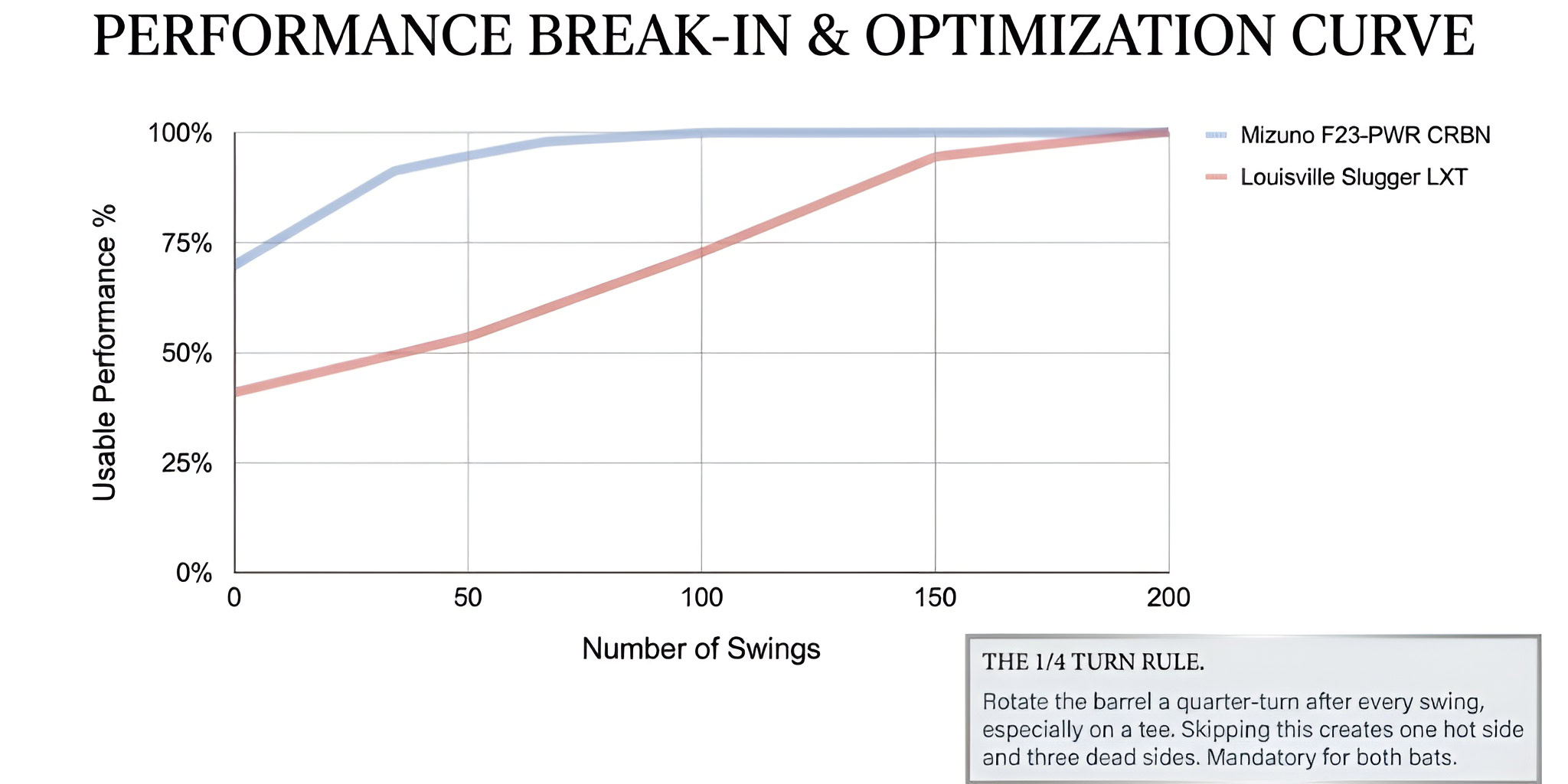
- Slower break-in, longer ramp-up: The PBF barrel starts firm and loosens gradually across 150–200 swings. By swing 150, you’re accessing real performance. By swing 200, it’s fully alive.
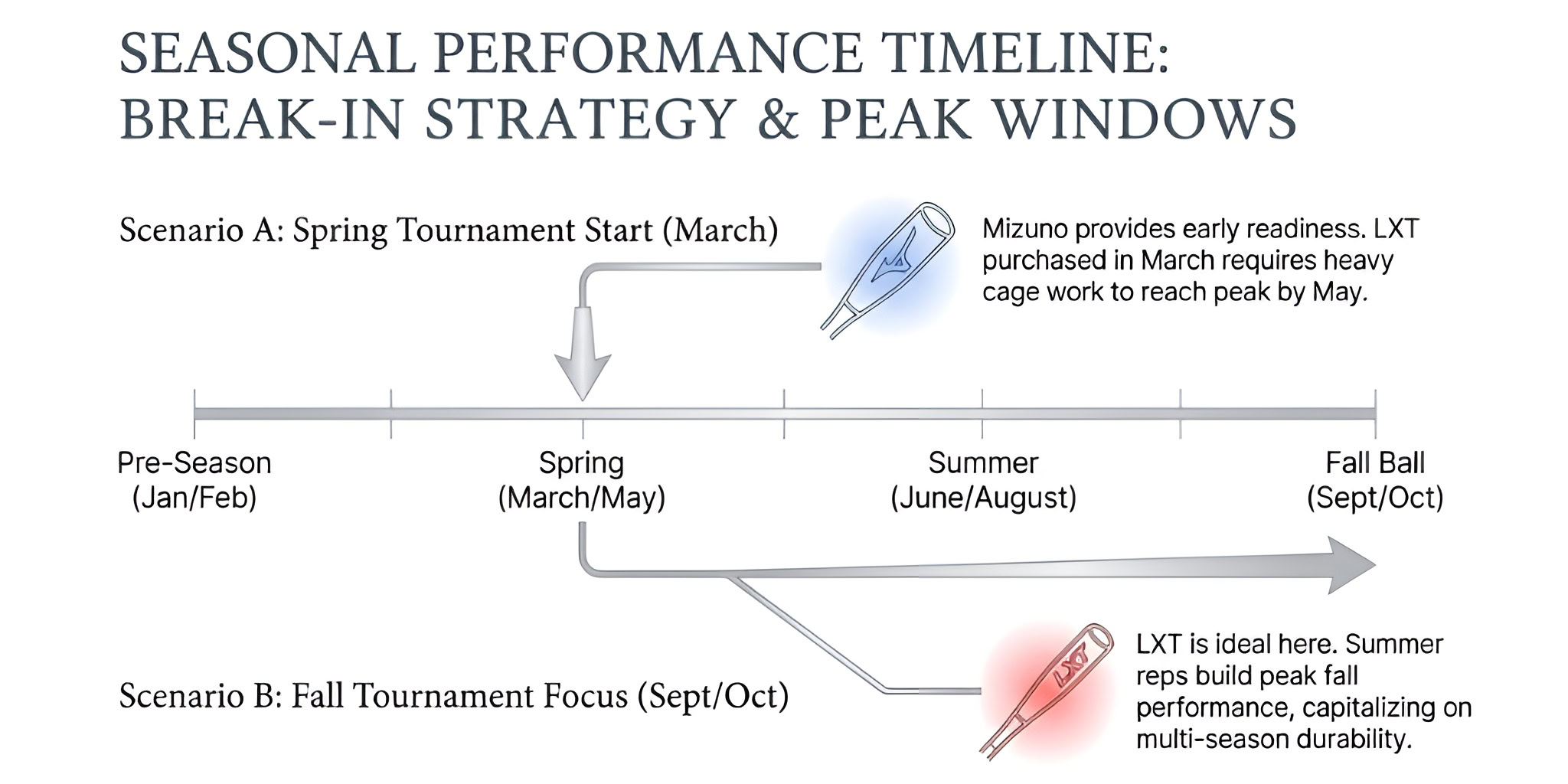
The real-world implication: If you’re playing a 12U or 14U tournament schedule with limited warm-up time between games, the Louisville Slugger LXT requires patience in early April but rewards you consistently by May when you’ve had tournament reps.
Mizuno: Black Onyx Carbon with Detonator Cor™
The Black Onyx Carbon barrel combines low barrel compression (the barrel compresses more easily on impact, creating a trampoline effect) with the Detonator Cor™ design (a structural pattern that optimizes compression and creates that distinctive booming sound).
What this means at the plate:
- Lower compression barrel = faster responsiveness: The barrel is “hotter” out of the wrapper because it doesn’t require as much break-in time to loosen. Many players report usable performance by swing 80–100.
- Tighter, smaller effective sweet spot: The engineering prioritizes peak performance on center-contact hits. Off-center contact doesn’t carry as well. You need to barrel it.
- Aggressive exit velocity reward: When you catch it right, the low-compression barrel combined with the carbon handle’s stiff energy transfer creates noticeably higher exit velocity than comparably-engineered bats.
The real-world implication: If you have tournament play starting in March and don’t have unlimited warm-up swings, the Mizuno gets you competitive performance faster. But it demands better mechanics and more consistent contact.
Break-In Reality: The Coaching Perspective
Both bats require break-in. Both benefit from the same protocol. But real-world timelines differ, and that matters.
Louisville Slugger LXT Break-In Timeline
Swings 1–50: The barrel is firm. You’ll notice the connection but the barrel itself feels stiff. Don’t panic—this is normal. Many players report the LXT feeling “dead” out of the wrapper.
Swings 51–150: Noticeable performance improvement. The barrel is loosening. Exit velocity climbs. The sweet spot begins to widen. By swing 100, you can feel the difference from swings 1–50.
Swings 151–200: The barrel reaches usable peak performance. Sweet spot is noticeably larger. The connection feels integrated, not separate.
Swings 200+: You’re accessing the full performance ceiling. The bat continues to improve slightly with continued use, but the major gains are locked in.
Coach’s note: Rotate the barrel a quarter-turn after each swing during break-in. This distributes impact evenly. Many players skip this step and end up with one “hot side” and three “dead sides.” Don’t be that player. Proper rotation takes 30 seconds per swing and directly affects how the barrel develops.
Mizuno F23-PWR CRBN Break-In Timeline
Swings 1–50: The barrel is responsive immediately. The Detonator Cor™ and low compression design mean the barrel is already performing near its ceiling. You’ll notice competitive pop from swing one.
Swings 51–100: Continued refinement. The barrel continues to loosen slightly, and performance becomes more consistent. By swing 75–80, most players report the bat feeling fully game-ready.
Swings 101–150: Final polish. Any remaining firmness dissipates. The barrel reaches optimal responsiveness and consistency.
Swings 150+: Maintenance phase. The barrel is fully alive and stable.
Coach’s note: The faster break-in is both an advantage and a responsibility. Because the barrel is hot immediately, players sometimes skip proper break-in or cut corners on rotation. This bat requires the full 150-swing protocol to develop evenly, even though it performs well early. The fast performance doesn’t mean fast break-in is complete.
When to Buy: Tournament Timeline
Your tournament schedule determines which bat fits your timeline. Select your season below.
Player Profiling: Who Should Swing What?
This is where equipment choice becomes personal.
Louisville Slugger LXT: The Contact Hitter’s Bat
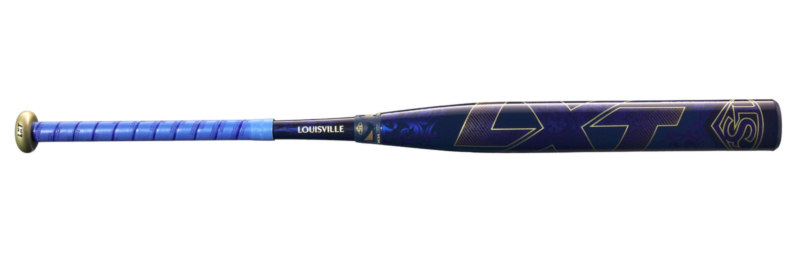
The LXT is purpose-built for players whose identity is timing and contact over raw power.
Slappers love the LXT. Slappers execute their technique while already moving toward first base, so responsiveness matters. The LXT’s balanced swing weight and forgiving sweet spot let slappers focus on bat path and timing without fighting excess barrel mass.
Contact hitters with quick hands thrive. If your game is meeting the ball out front, working counts, and putting the ball in play with authority across all fields, the LXT’s responsive barrel and large sweet spot reward that approach. You get carry on well-hit balls without needing to overpower the zone.
High school and travel ball players stepping up competitive levels often gravitate toward the LXT. The balanced swing weight makes the transition smooth. You’re not fighting excess barrel mass; you can focus on mechanics.
Smaller-framed or younger players swinging higher drop weights (-11, -10) find the LXT’s lightness allows them to repeat mechanics without early-season fatigue.
The honest limitation: The LXT doesn’t hide anything. If your swing is mechanically sound, you’ll get consistent results. If mechanics break down—early shoulder rotation, dropped hands, casting—the bat won’t compensate. And that’s actually valuable feedback for development.
Mizuno F23-PWR CRBN: The Precision Power Player
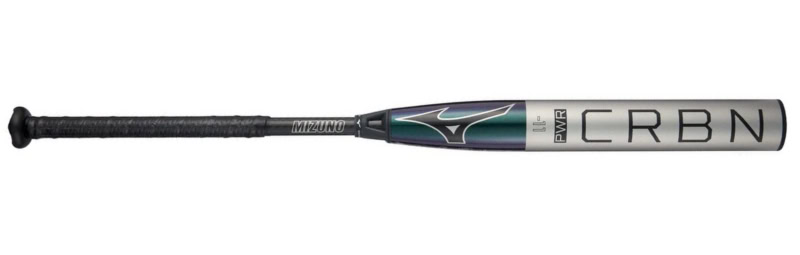
The Mizuno is engineered for hitters whose identity is controlled authority and exit velocity.
Gap hitters own this bat. If your game is working counts, hitting to different fields, and producing extra-base hits on solid contact, the Mizuno’s barrel response and consistent pop rewards that approach. The stiff connection keeps the barrel on plane through outside-corner contact—critical when you’re punching balls to the gaps.
Power-conscious contact hitters prefer it. You’re not trying to hit home runs, but you respect your strength and want the barrel to have authority on solid contact. The low-compression barrel and stiff carbon handle give you that.
Stronger high school and college players with developed mechanics find the Mizuno’s stiffer feel natural. You’re not swinging a power bat, but you’re not swinging a speed stick either. You’re in the middle ground where solid mechanics create explosive results.
Slightly heavier or more athletic players stepping into competitive lineups find the Mizuno’s responsive barrel matches their strength level. The bat rewards good mechanics immediately without requiring a long break-in adjustment period.
The honest limitation: The Mizuno requires better mechanics to shine. If your contact is inconsistent or your timing wavers, the smaller sweet spot and stiffer feel won’t forgive you as readily as the LXT does. You need to barrel it. Players still developing their swing might get frustrated with the forgiveness curve.
Technical War Room
Break-In Speed
Mizuno game-ready by swing 100. LXT reaches peak by swing 150+. Choose based on your tournament timeline.
Quick Reference Specs
Louisville Slugger LXT 2025
Mizuno F23-PWR CRBN
Performance Edge
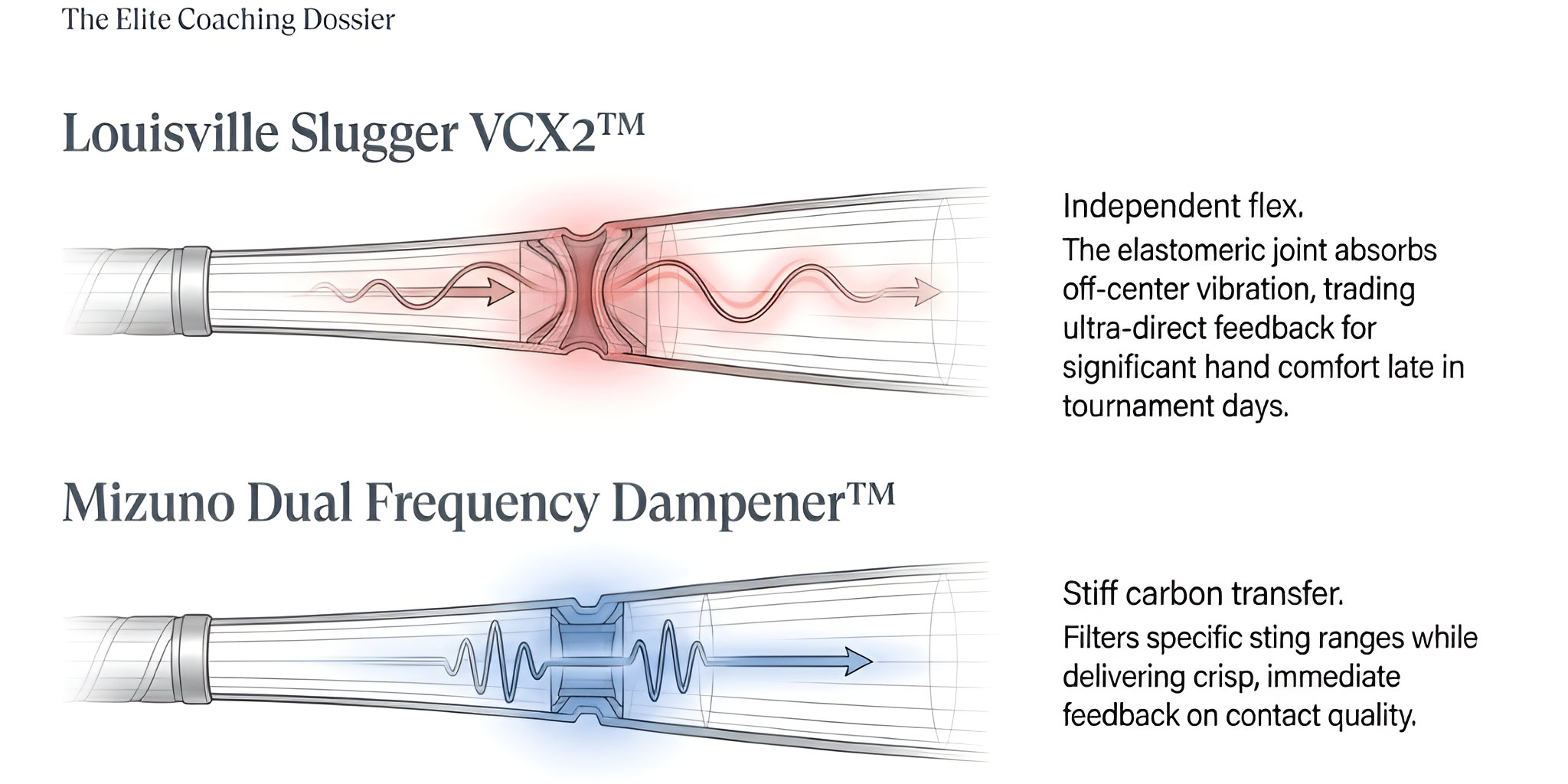
Sweet Spot and Forgiveness: Where You Catch It
Both bats have large sweet spots compared to most options. But “large” is relative, and the positioning matters.
LXT Sweet Spot Architecture
The LXT’s sweet spot is positioned centrally and extends slightly toward the barrel end. It’s forgiving across multiple pitch locations.
- Pitches slightly inside: Still carry. The barrel’s multi-layer compression design means the inner portions flex efficiently even on jammed contact.
- Pitches off the end: Carry further than you’d expect. The COPA End Cap is designed specifically for this scenario.
- Pitches in the heart of the zone: Peak performance, as expected.
The design philosophy is clear: reward consistency. Most contact hitters take dozens of pitches at various locations on a tournament day. The LXT’s sweet spot positioning ensures you get carry across that range.
Mizuno Sweet Spot Architecture
The Mizuno’s sweet spot is more centered and tightly defined. It rewards precise contact but punishes mishits more noticeably.
- Pitches slightly inside: Less carry than the LXT. The tighter sweet spot and stiffer connection mean jammed contact doesn’t travel as far.
- Pitches off the end: Similar story. Off-center contact still carries, but not with the same authority as well-centered hits.
- Pitches in the heart of the zone: Peak performance exceeds the LXT. The low-compression barrel and stiff connection create noticeably higher exit velocity.
The design philosophy is equally clear: reward precision. This bat is built for hitters who consistently make solid contact and want maximum reward for doing so.
| Sweet Spot Architecture | Louisville Slugger LXT | Mizuno F23-PWR CRBN |
|---|---|---|
| Overall Size | Large, forgiving | Large, precise |
| Positioning | Central, extends toward barrel end (multi-zone) | Centered, tightly defined (single-zone) |
| Inside Pitch Performance | Excellent carry, multi-layer compression flex | Good carry, requires precise contact |
| Off-End Performance | COPA cap designed for off-end carry | Off-end contact less rewarding |
| Center Contact (Barreled) | Consistent pop, reliable distance | Peak performance, noticeably higher exit velo |
| Forgiveness Philosophy | Rewards accuracy, tolerates slight misses | Rewards precision, demands contact discipline |
| Optimal Contact Profile | All-field hitters, contact-focused approach | Gap hitters, barrel-up specialists |
| Development Level | Better for players still building mechanics | Better for players with established swing |
Swing Weight Table: LXT vs F23-PWR-CRBN
| Aspect | Ghost Unlimited | DeMarini CF |
|---|---|---|
| Swing Weight Feel | Balanced-to-Loaded (by drop) | Balanced (all drops) |
| Moment of Inertia (MOI) | Higher (stiff, resists rotation) | Lower (responsive, quick) |
| Acceleration Through Zone | Controlled (requires bat speed) | Quick (minimal resistance) |
| Solid Contact Feel | Connected, stiff, direct feedback | Responsive, flexible, clean feel |
| Mishit Sensation | Vibration present, clear feedback | Dampened, forgiving, minimal sting |
| Barrel Arrival Speed | Slightly delayed (heavier mass) | Quick (lighter swing weight) |
| Hand Comfort (Full Game) | Minor vibration buildup | Minimal hand fatigue |
Sweet Spot Analysis
Where each bat performs best and how contact location affects performance
What This Means for Your Game
Choose Mizuno if:
- You prioritize maximum exit velocity
- You have strong, consistent mechanics
- You're a gap hitter or power-conscious player
- You want direct feedback on contact quality
Choose Louisville Slugger LXT if:
- You want forgiveness on off-barrel hits
- You're developing swing consistency
- You're a contact hitter or slapper
- You value minimal hand fatigue in long games
Hitter Profile Comparison Table
| Aspect | Mizuno F23-PWR CRBN | Louisville Slugger LXT |
|---|---|---|
| Swing Weight Feel | Balanced, Controlled (stiff carbon handle) | Balanced, Light (responsive) |
| Connection Response | Direct, Stiff (minimal flex) | Flexible, Integrated (VCX2 dampening) |
| Barrel Acceleration | Crisp (stiff connection resists flex) | Quick (lighter swing weight) |
| Solid Contact Feel | Tight, Connected, Direct feedback | Clean, Responsive, Integrated feel |
| Off-Center Hit Sensation | Vibration present, tells you where you hit | Vibration dampened, minimal sting |
| Hand Feedback on Mishits | Clear information, stiffer feel | Forgiving sensation, easier on hands |
| Hand Fatigue (Tournament Days) | Moderate (direct energy transfer) | Minimal (light swing weight, dampening) |
| Repeatability of Mechanics | Controlled (heavier feel assists timing) | Consistent (light feel allows swing repetition) |
Common Myths, Busted
Myth: "The Mizuno is better because it reaches performance faster."
Fast break-in isn't the same as better. The Mizuno gets hot quicker because its low-compression barrel starts near its performance ceiling. The LXT's slower break-in doesn't mean it's inferior—it means the composite starts tighter and becomes more resilient over time. Players who've used the LXT for two seasons report sustained performance, while some Mizuno users see a steeper decline in year two. Speed to usability matters for spring tournament schedules. Long-term consistency matters more when you're keeping the same bat through fall ball. Pick based on your tournament timeline, not because fast is inherently better.
Myth: "Two-piece bats can't compete with one-piece on exit velocity."
This misses the actual engineering. The LXT's VCX2 connection does flex, but that's not a weakness—it's intentional design that distributes energy differently. On center contact, the LXT delivers consistent, high exit velocity. The Mizuno edges ahead on peak exit velo because of its low-compression barrel and stiff connection, but we're talking about 2-3 mph difference on perfectly struck balls. For most hitters, the gap closes when you factor in forgiveness. A contact hitter using the LXT puts more balls in play with authority. A gap hitter using the Mizuno maximizes velocity on barrels. Neither is universally superior—they trade peak performance for consistency.
Myth: "The lighter swing weight of the LXT means you're giving up power."
Swing weight and power aren't directly connected the way most players think. A lighter bat is easier to accelerate through the zone—that's physics. For younger players or slappers, that acceleration advantage often outweighs any extra barrel mass from a heavier bat. The LXT lets you repeat mechanics more consistently across 100+ tournament swings without hand fatigue. By day three of a tournament weekend, when your hands are already dead, that lighter swing weight becomes a genuine performance advantage. Players who've made the jump from heavy bats to the LXT report better late-game consistency, not less power. The Mizuno's balanced feel is controlled, not heavy—it's not like you're swinging a sledgehammer.
Myth: "If you don't barrel it up perfectly with the Mizuno, the bat punishes you."
The Mizuno has a large sweet spot—just a more precisely defined one than the LXT. Off-center contact still carries to the gaps. The Mizuno doesn't "punish" you; it just doesn't hide your mistakes as well. That direct feedback isn't punishment—it's information. Some players find that feedback valuable because it tells them exactly what went wrong. Others prefer the LXT's more forgiving sensation. This isn't a flaw in the Mizuno's design. It's the intentional tradeoff: peak precision over margin for error. Players with strong, consistent mechanics actually prefer that direct feedback. Developing players—those still building muscle memory—tend to prefer the LXT's forgiveness.
Myth: "You need to break in the LXT on a tee with perfect rotation or it won't develop properly."
This one's half-truth, which makes it dangerous. Yes, rotation matters—not turning the bat creates uneven break-in and dead spots. But this applies to both bats equally, and it's not some fragile process. Proper rotation takes ten seconds per swing, not some ritualistic commitment. More important: tournament play develops bats faster than cage work because game conditions vary more. Mixed pitches, different speeds, angle changes—all that variation accelerates the break-in. You don't need a special tee protocol. You need to rotate the barrel and use the bat. The mystique around LXT break-in has grown because people don't want to be patient, but the patience itself isn't the issue. The bat will break in. It just takes more swings than the Mizuno.
Common Questions Answered
The Real Story: Both Work, Different Reasons
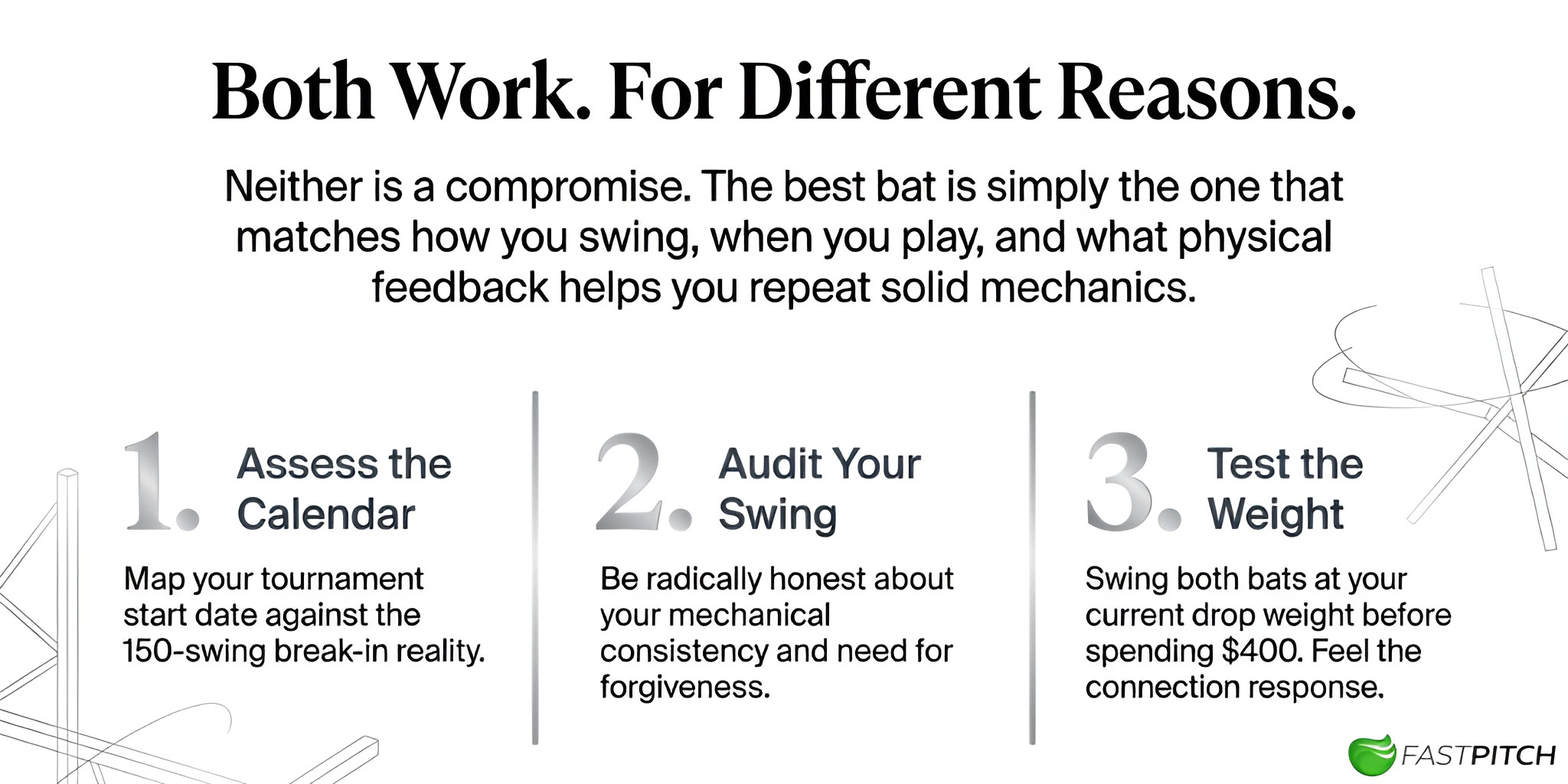
Here’s the truth most bat reviews avoid: both the Louisville Slugger LXT and the Mizuno F23-PWR CRBN are legitimately good fastpitch bats. They’re not gimmicks. They’re not overhyped. They deliver real performance at $350–$400.
The difference isn’t “which is better.” The difference is “which matches your hitting profile and tournament schedule.”
The LXT works because Louisville Slugger refined a proven formula and stuck with it. The engineering is trustworthy. The durability is established. The sweet spot is genuinely large and forgiving. If you’re a contact hitter, you’ll feel immediately at home.
The Mizuno works because Japanese engineering excellence translated into a barrel design that rewards precision and delivers higher exit velocity on center contact. The break-in timeline is faster. The connection is stiffer. The feedback is more direct. If you’re a power-conscious gap hitter with strong mechanics, you’ll feel the performance advantage immediately.
Neither bat requires you to sacrifice quality. Neither is a compromise play. They just serve different players differently.
The best bat is the one that matches how you actually swing, when you actually need to play, and what kind of feedback helps you repeat solid mechanics throughout a long tournament weekend.
Real-World Performance Feedback: What Players Actually Report
Louisville Slugger LXT Player Feedback
- “It rewards consistency. My contact improved because the bat doesn’t punish me as much for slightly off-center hits, so I can focus on swing mechanics rather than fighting the bat.”
- “The break-in period was longer than I expected, but once it was broken in, the performance stayed solid all season.”
- “It swings lighter than I thought it would. That’s an advantage for me because I can repeat my mechanics late in tournament days.”
- “The connection feels integrated. It’s not like I feel a separate handle and barrel moving independently—it feels like one unit.”
Mizuno F23-PWR CRBN Player Feedback
- “It feels hot immediately. That was awesome for my schedule because I bought it in March and didn’t have months to break it in.”
- “The exit velocity is noticeable. On balls, I barrel up, I get noticeably more carry than with my previous bat.”
- “It requires better contact. If I’m not squaring it up, the forgiveness just isn’t there. But when I’m locked in mechanically, it rewards me.”
- “The sound is distinctive. I love the booming contact sound. It’s psychological, but knowing I hit it right gives me confidence.”
The Bottom Line
The Louisville Slugger LXT is the consistency machine. It rewards good mechanics with reliable performance across a wide sweet spot. If you’re a contact hitter or slapper, you’ll feel immediately comfortable. Break-in requires patience, but the payoff is durability and dependability that compound across multiple seasons.
The Mizuno F23-PWR CRBN is the precision performer. It rewards strong mechanics with higher exit velocity and faster performance ramp-up. If you’re a gap hitter or power-conscious player with solid contact skills, you’ll feel the performance advantage immediately. The stiffer connection and smaller sweet spot demand better mechanics, but they deliver when mechanics are strong.
At $350–$400, neither bat is a bargain-bin compromise. Both represent serious engineering and proven performance. The choice comes down to player profile, tournament schedule, and honest self-assessment of what kind of feedback helps you repeat solid mechanics.
Test both if you can. Swing them at your current drop weight. Feel the difference in swing weight and connection response. See which one feels like an extension of your mechanics rather than a tool you’re fighting.
That feel is your answer.
Similar Products